Building a 30-Day Emergency Food Supply for Your Family
A month of food on hand sounds like a lot until you realise it is mostly groceries you already buy, just in larger amounts and stored a little more carefully. Building a 30-day emergency food supply turns a week of shortages into an inconvenience, and it doubles as protection against job loss and illness.
This guide shows you how to grow a food supply in stages, from a two-week shelf to a full 30 days. It covers how much food a household needs, the staples that hold up best, the freeze-dried and canned options worth buying, cooking without power, and how to rotate everything so nothing is wasted.
The short version
- Build in stages: a 72-hour kit, then a 2-week shelf, then a full 30 days.
- Plan on roughly 2,000 calories per person per day, adjusted for age, activity, and health.
- Store food you already eat, so it rotates naturally and nothing is wasted.
- Prioritise shelf-stable staples: rice, pasta, oats, beans, canned goods, oils, and nut butters.
- Include a manual can opener and a way to cook without power or a working gas line.
- Never run a camp stove or generator indoors; carbon monoxide is the real danger.
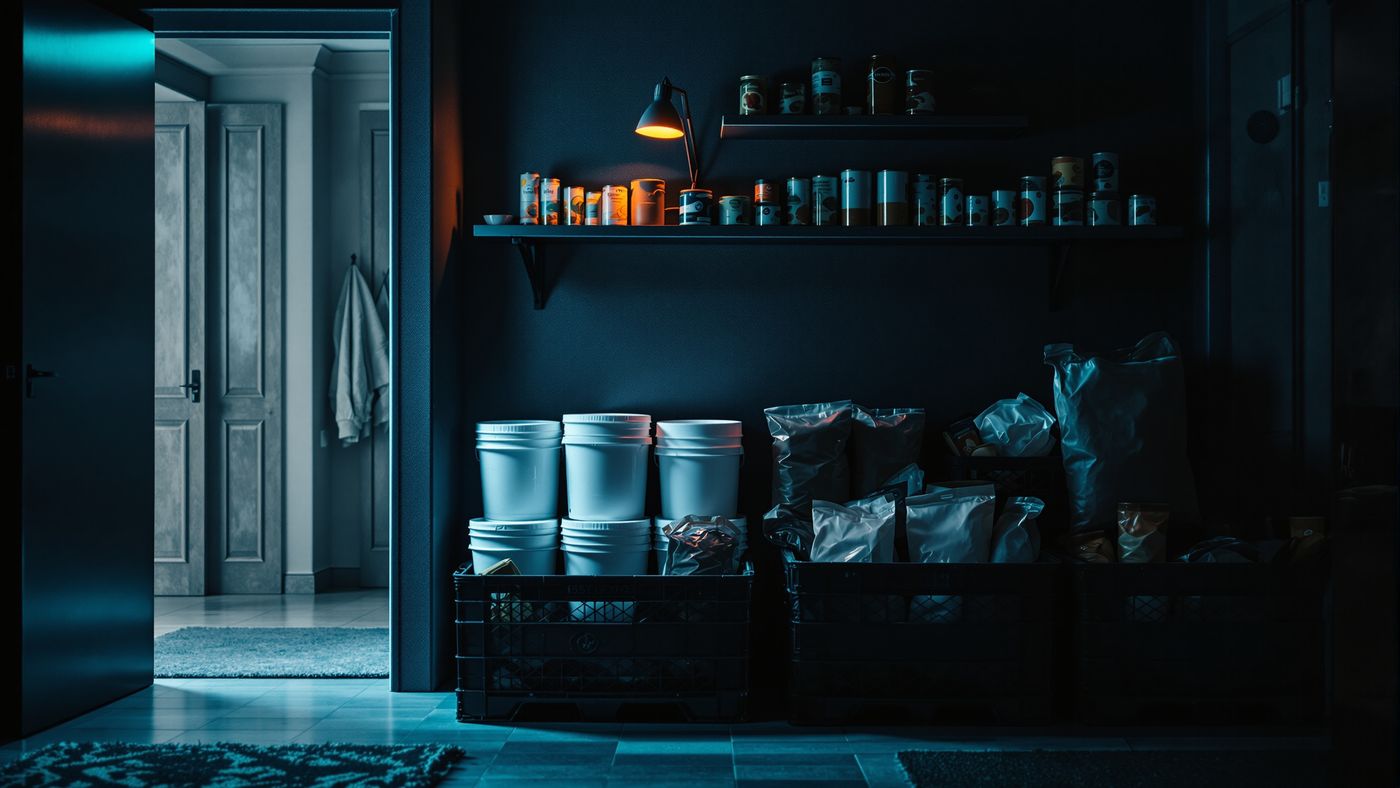
- Store food in a cool, dry, dark place and rotate it using a first-in, first-out system.
The 2-Week to 30-Day Progression
Trying to buy a month of food in one trip is expensive, wasteful, and easy to abandon. A far better approach is to build in stages, which is how emergency-management guidance such as FEMA's Ready.gov frames the progression. Each stage stands on its own, so you are never without a plan even if you stop partway.
The three stages
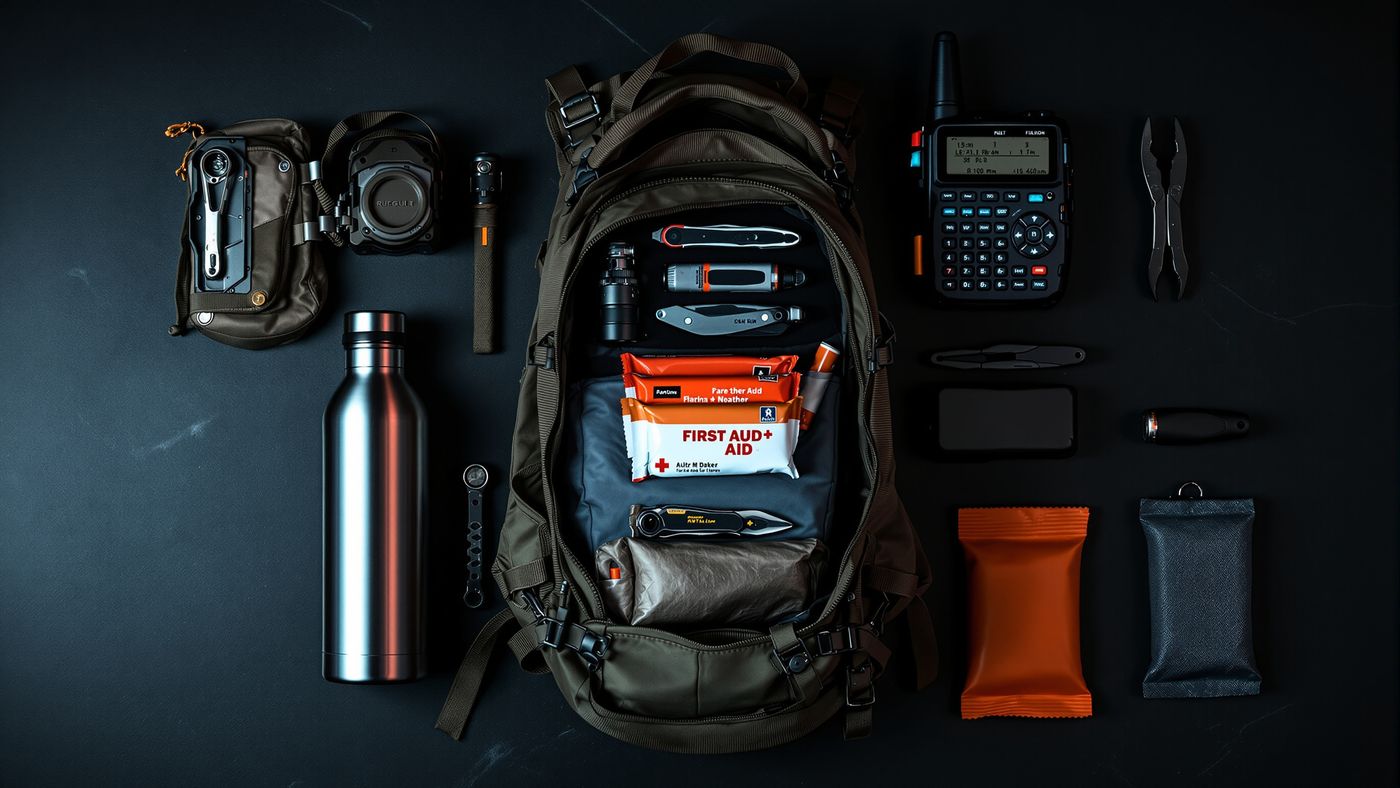
- 72-hour kit: three days of ready-to-eat food and water in your go bag
- Two-week shelf: a pantry section holding two weeks of normal, shelf-stable groceries for the household
- 30-day supply: the two-week shelf doubled, plus a few long-shelf-life backups such as freeze-dried cans
Start with the two-week shelf and treat 30 days as a goal you grow toward, not a wall to clear. Buying one or two extra items per grocery trip gets you there without a big outlay, and because you buy what you already eat, the money simply moves from a future grocery bill to your shelf.
How Much Food Do You Actually Need?
Food planning runs on two numbers: how many people you are feeding and how many calories each needs. A common starting point is about 2,000 calories per person per day, adjusted for age, body size, activity, pregnancy, and health. Children and older adults generally need fewer than active adults.
Calories are easier to store when you think in staples rather than meals. A 30-day supply for four people is roughly 240,000 calories, which a manageable base of rice, pasta, beans, oats, oil, and canned goods can cover.
Rough calorie anchors
| Item | Approx. calories | Notes |
|---|---|---|
| 1 lb / 0.45 kg dry rice | ~1,600 | Long shelf life; needs water and heat |
| 1 lb / 0.45 kg dry beans | ~1,500 | Protein and fibre; needs long cooking |
| 1 lb / 0.45 kg rolled oats | ~1,700 | Quick to prepare; versatile |
| 1 jar peanut butter (16 oz / 454 g) | ~2,600 | Ready to eat; energy dense |
| 1 can tuna (5 oz / 142 g) | ~120 | Protein; ready to eat |
You do not need to count every calorie. The goal is a shelf that holds weeks of food, covers carbohydrates, protein, and fat, and includes items needing no cooking in case the stove is unavailable.
This guide is part of the free The Ultimate Preppers Guide 2027 - 56 pages of checklists, tables and reference sheets you can print and keep.
The Core Shelf-Stable Staples
The backbone of any 30-day supply is a set of cheap, durable staples you already cook with. Because they are dry or canned, they keep for months or years without refrigeration.
Build the base from these
- Grains: white rice, pasta, couscous, and rolled oats
- Legumes: dried and canned beans, lentils, and chickpeas
- Proteins: canned tuna, salmon, and chicken; peanut butter; nuts and seeds
- Fats and oils: cooking oil, olive oil, and shortening
- Canned and jarred goods: tomatoes, vegetables, fruit, and soup
- Flavour and basics: salt, sugar, honey, spices, stock cubes, and coffee or tea
- Ready-to-eat: crackers, granola bars, dried fruit, and shelf-stable milk
Two small additions help. Salt, sugar, and oil are not just flavour; they are essential for cooking from scratch. And include a few comfort items such as cocoa or a favourite sweet, because morale matters on day fifteen as much as on day one.
Freeze-Dried, Canned, and Ready-to-Eat Options
Beyond the staples, a few categories of pre-prepared food make a 30-day supply easier to live with, each with a trade-off between shelf life, cost, and effort.
Freeze-dried and dehydrated
Freeze-dried meals in number-10 cans and pouches are the longest-keeping option, often rated for decades when stored cool and unopened. They rehydrate with hot water and keep their texture well, making them ideal for a deep backup shelf. They cost more per meal, so use them to extend a supply rather than form its base.
MREs and ready meals
Military-style MREs and shelf-stable ready meals need no cooking and can be eaten cold, making them excellent for a go bag or an outage with no heat. Their shelf life is shorter than freeze-dried food, so check dates and rotate them.
Ordinary canned goods
Cans of soup, stew, chilli, beans, and vegetables are the most affordable ready-to-eat supply you can keep, and most are fine cold from the can. That is why canned food belongs in a 30-day supply in large numbers. Buy brands your family already likes so rotation stays easy.
Cooking Without Power or Gas
A food supply is only as useful as your ability to prepare it. A long outage may take out both the electric stove and the gas line, so plan for at least two ways to cook or heat food, and plan to cook outdoors.
Safe cooking options
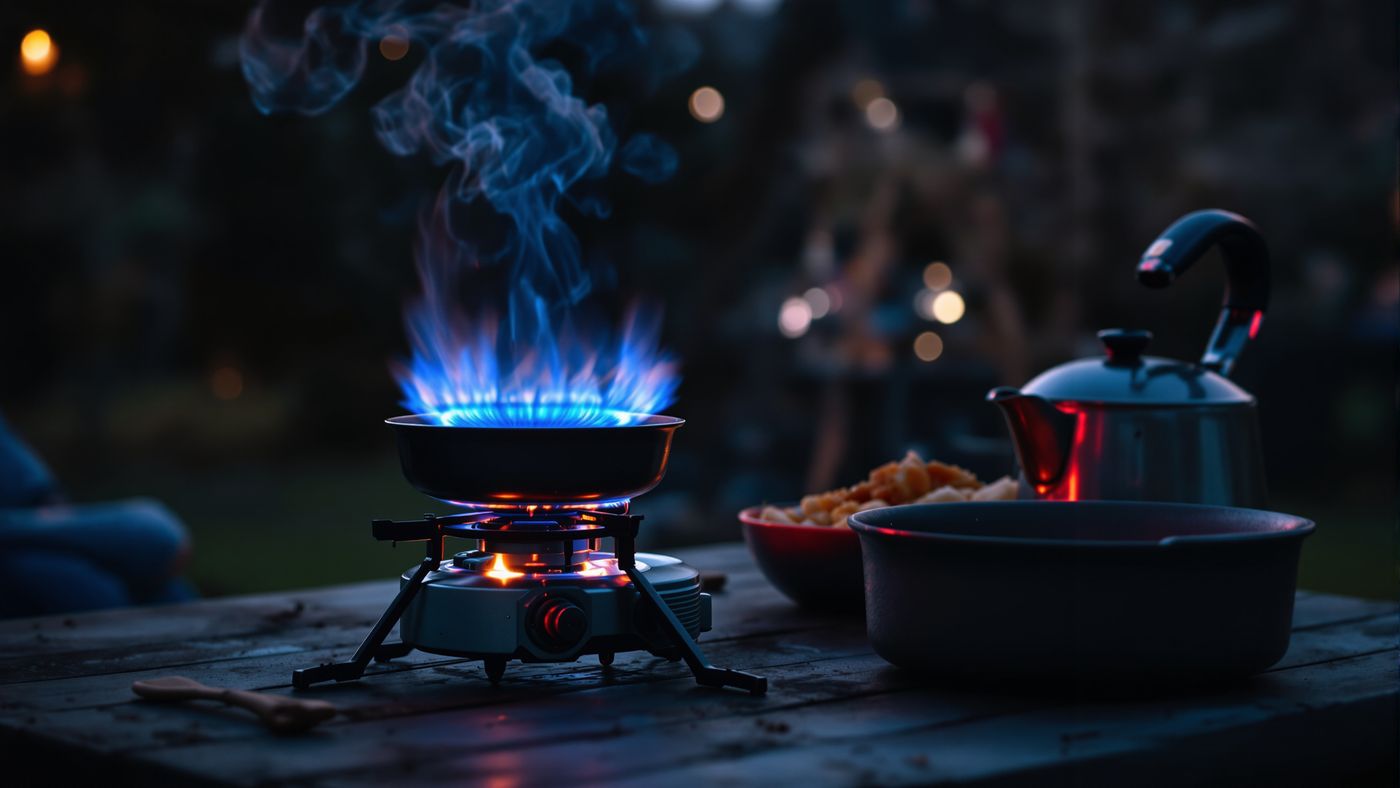
- Camp stove: a small propane or butane stove with spare fuel canisters, used outdoors or in a well-ventilated space
- Barbecue or fire pit: an existing grill can boil water and heat food, though it needs fuel or charcoal on hand
- Alcohol or solid-fuel stove: lightweight and stable for boiling water in small batches
- No-cook meals: peanut butter, crackers, canned goods, and bars that need no heat at all
Carbon monoxide: the rule you never break
Never use a camp stove, barbecue, generator, or any fuel-burning device inside a home, garage, tent, or camper. These appliances produce carbon monoxide, an odourless gas that kills quietly, and it is one of the most common causes of preventable death after a storm. Cook outside, and keep a battery-powered carbon monoxide alarm in the home. This single rule matters more than any other in this article.
Test your method before you need it. Boiling a pot of water on a camp stove in the driveway teaches you how much fuel it takes and how long, which is what you do not want to learn for the first time during a blackout.
Storing Food So It Lasts
How you store food decides how long it lasts. Heat, moisture, light, and air are the enemies of a good pantry, and managing them is mostly about the right spot and containers.
Storage rules that matter
- Keep the pantry cool, dry, and dark, ideally between 50 and 70°F (10 and 21°C)
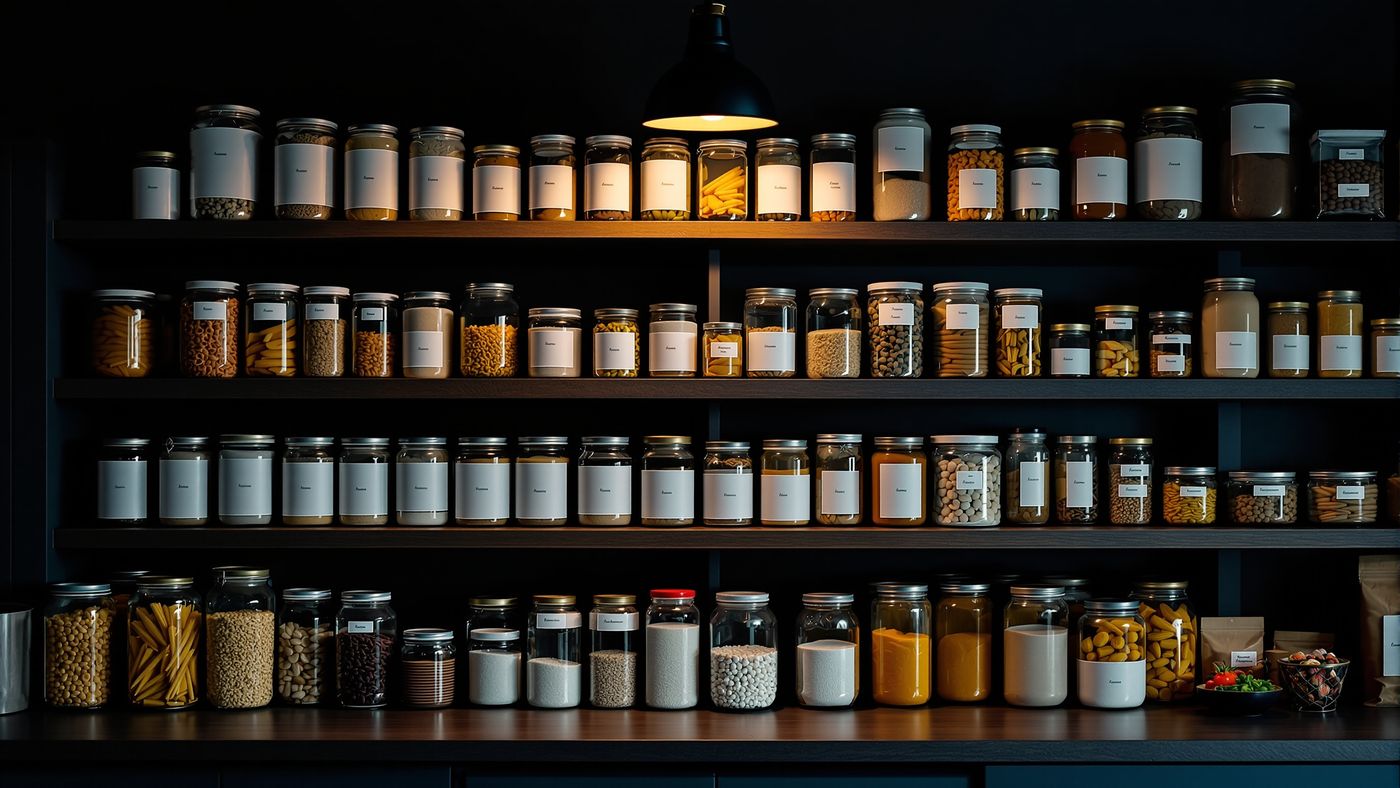
- Transfer dry goods into airtight food-grade containers to keep out moisture and pests
- Elevate food off a concrete floor and away from exterior walls that sweat
- Store food away from gasoline, paint, and cleaning products that give off fumes
- Keep the oldest items at the front so they get used first
Approximate shelf lives
| Food | Typical unopened shelf life |
|---|---|
| White rice, dry pasta | Several years |
| Canned beans and vegetables | 2 to 5 years |
| Canned meat and fish | 2 to 5 years |
| Rolled oats, nuts | 6 to 12 months for best quality |
| Cooking oil | About 1 to 2 years |
| Freeze-dried cans | Often 20+ years if kept cool |
These are general ranges, not guarantees. Always trust the package date and your own senses: if a can is bulging, leaking, or badly dented, or food smells wrong, throw it out.
Rotation, Special Diets, and the People You Forgot
The best way to keep a food supply fresh is to eat it. A first-in, first-out system - new items to the back, older items to the front and into normal cooking - means nothing sits long enough to expire. This is why storing food you actually eat matters: unfamiliar survival rations never rotate, they just age out.
Do not forget these people and needs
- Infants: formula, bottles, and safe water for mixing
- Older adults and anyone ill: soft, easy-to-prepare foods and any prescription or special dietary items
- Allergies: a clear stock of safe alternatives, kept separate to avoid cross-contamination
- Pets: a full month of their normal food plus spare bowls
A note listing what is in the pantry, with dates, turns rotation into a glance instead of a search. Pair that shelf with your water supply and 72-hour kit, and your household is ready for most of what a bad week can throw at it.
A 30-day emergency food supply is not about deprivation. Done well, it is simply a pantry that runs a little deeper, stocked with food your family enjoys.
Frequently asked questions
How much food do I need for a 30-day emergency supply?
Plan on roughly 2,000 calories per person per day, adjusted for age, activity, and health. In practice, that means a base of staples such as rice, pasta, beans, oats, oil, and canned goods, plus some ready-to-eat items. Four people for 30 days is about 240,000 calories, which is easier to reach with bulk staples than with packaged meals.
What are the best foods to store for a long emergency?
Shelf-stable staples hold up best: white rice, dry pasta, oats, dried and canned beans, canned meat and vegetables, cooking oil, peanut butter, salt, sugar, and honey. Freeze-dried number-10 cans keep the longest, often for decades, and canned goods are the most affordable ready-to-eat option. Store food you already eat so it rotates naturally.
How do I cook food if the power is out?
Use a camp stove, barbecue, or fire pit outdoors, or rely on no-cook foods such as peanut butter, crackers, and canned goods. Crucially, never run a fuel-burning stove, grill, or generator indoors, because they produce deadly carbon monoxide. Keep a battery-powered carbon monoxide alarm and cook only in the open air.
How do I rotate a 30-day food supply so it does not spoil?
Use a first-in, first-out system: put new items at the back and use the older ones in normal cooking, so nothing sits long enough to expire. Keep a list of what you have and its dates, and check it once or twice a year. Buying food you already eat is what makes rotation easy and keeps the whole supply fresh.
Where should I store emergency food?
Store it in a cool, dry, dark place, ideally between 50 and 70°F (10 and 21°C), away from fumes, heat, and moisture. Transfer dry goods into airtight food-grade containers, elevate them off concrete floors, and keep the oldest items at the front. Label everything with dates so rotation is simple.
Should I buy freeze-dried food or just extra groceries?
Both, in the right proportion. Extra groceries form the affordable base and rotate through your normal cooking. Freeze-dried number-10 cans cost more per meal but last for decades and make a deep backup shelf. Use groceries for the bulk of your 30 days and freeze-dried cans to extend and lengthen the supply.
What to do first
Start this week by creating one shelf or bin for emergency food and filling it with a two-week base: a bag of rice, a bag of pasta, several cans of beans and vegetables, a jar of peanut butter, and a bottle of oil. Then set a recurring reminder to add two extra shelf-stable items to each grocery trip until the shelf holds a full 30 days.