Generator Safety: How to Power Your Home Safely
A portable or standby generator can keep your heat, fridge, well pump, and internet alive through a multi-day outage - but only if it is set up correctly. Handled carelessly, the very machine meant to protect your family becomes one of the leading causes of injury after a storm. Generator safety is not optional equipment; it is the whole point.
This guide covers the rules that keep people safe: why carbon monoxide means a generator never runs indoors, how far it must sit from the house, why backfeeding the panel without a transfer switch is dangerous, how to size and connect a generator, and how to store fuel so it starts when you need it.
The short version
- Never run a generator indoors, in a garage, in a basement, or near a window or door - carbon monoxide is odourless and builds to dangerous levels.
- Place a portable generator outdoors, at least 20 feet / 6 metres from the home, with the exhaust pointing away from windows, doors, and vents.
- Never plug a generator into a wall or dryer outlet to backfeed the house - use a transfer switch or an approved interlock kit instead.
- Add up the running watts of everything you need at once, then add the largest starting surge and a margin; motors draw two to three times their running watts to start.
- Use heavy-duty, outdoor-rated cords sized for the load, and never daisy-chain them or run them through standing water.
- Store gasoline in approved containers in a cool, ventilated place away from ignition sources, and let the generator cool before refuelling.
- Install and test carbon monoxide alarms on every level and outside sleeping areas.
Carbon Monoxide: The One Rule That Matters Most
Every year, carbon monoxide from generators harms people who were simply trying to keep their lights on. CO is produced whenever fuel burns, and a running generator makes it constantly. The gas is colourless and odourless, so it gives no warning before symptoms such as headache, dizziness, and confusion.
The rule cannot be softened: never run a generator indoors, in a garage, in a basement, or near a window or door. Running it just inside the garage with the door open is not safe - CO seeps into living space through gaps, and attached garages are exactly where people are harmed. Do not run one on a balcony or under a roof overhang.
Layers that protect you
- Place the generator outdoors with the exhaust pointing away from the home.
- Keep it at least 20 feet / 6 metres from any window, door, vent, or air intake - farther is better.
- Install CO alarms on every level and outside sleeping areas, and test them monthly.
- Know the signs of CO exposure and get to fresh air, then call for help, if anyone develops a headache, dizziness, or confusion.
Sizing a Generator: Running Watts, Starting Watts, and Real Loads
A generator that is too small will trip or brown out and can damage motors; one that is far too large wastes fuel and money. The way to size it is to add up the loads you actually need to run at the same time.
Every appliance has two numbers that matter. Running watts is what it draws while working normally. Starting watts (surge) is the brief extra a motor needs to start, usually two to three times the running figure for pumps, fridges, freezers, and air conditioners. Check the nameplate for real numbers; the table shows typical ranges to plan.
| Appliance | Typical running watts | Typical starting surge |
|---|---|---|
| Refrigerator | 100-200 | 800-1,200 |
| Freezer | 150-200 | 700-1,100 |
| Gas furnace blower | 300-500 | 1,000-1,500 |
| Sump pump | 800-1,000 | 2,000-3,000 |
| Well pump | 1,000-2,000 | 2,000-4,000 |
| Space heater | 1,500 | - |
| Microwave | 600-1,500 | - |
| LED lights (each) | 5-15 | - |
| Phone / laptop charger | 5-100 | - |
How to do the math
- Write down every device you want to run at once.
- Add their running watts together.
- Add the single largest starting surge, since typically only one big motor starts at a time.
- Add a margin of about 20-25% so the generator is not strained at its limit.
Because a big load such as a well pump can push a small generator over its limit, plan to run heavy loads one at a time. A plug-in power meter removes the guesswork before you buy.
This guide is part of the free The Ultimate Preppers Guide 2027 - 56 pages of checklists, tables and reference sheets you can print and keep.
Portable vs Standby: Choosing Your Generator Setup
The two main choices solve the same problem differently. A portable generator is inexpensive, flexible, and works for camping, job sites, and emergencies, but it needs fuel, manual deployment, and cords. A home standby generator is permanently installed, runs on natural gas or propane, and starts automatically - but it costs far more and must be installed by a licensed electrician with a transfer switch.
| Portable | Standby | |
|---|---|---|
| Cost | Lower | Much higher, plus installation |
| Starts | Manually | Automatically |
| Fuel | Gasoline or dual-fuel | Natural gas or propane |
| Connection | Cords, or inlet plus transfer switch | Whole-house transfer switch |
| Best for | Essential loads, flexibility | Long outages, hands-off protection |
For many families, a mid-size portable generator with a professionally installed inlet box and transfer switch is the practical middle ground.
Generator Safety Starts With Placement: Outdoors, 20 Feet, Exhaust Away
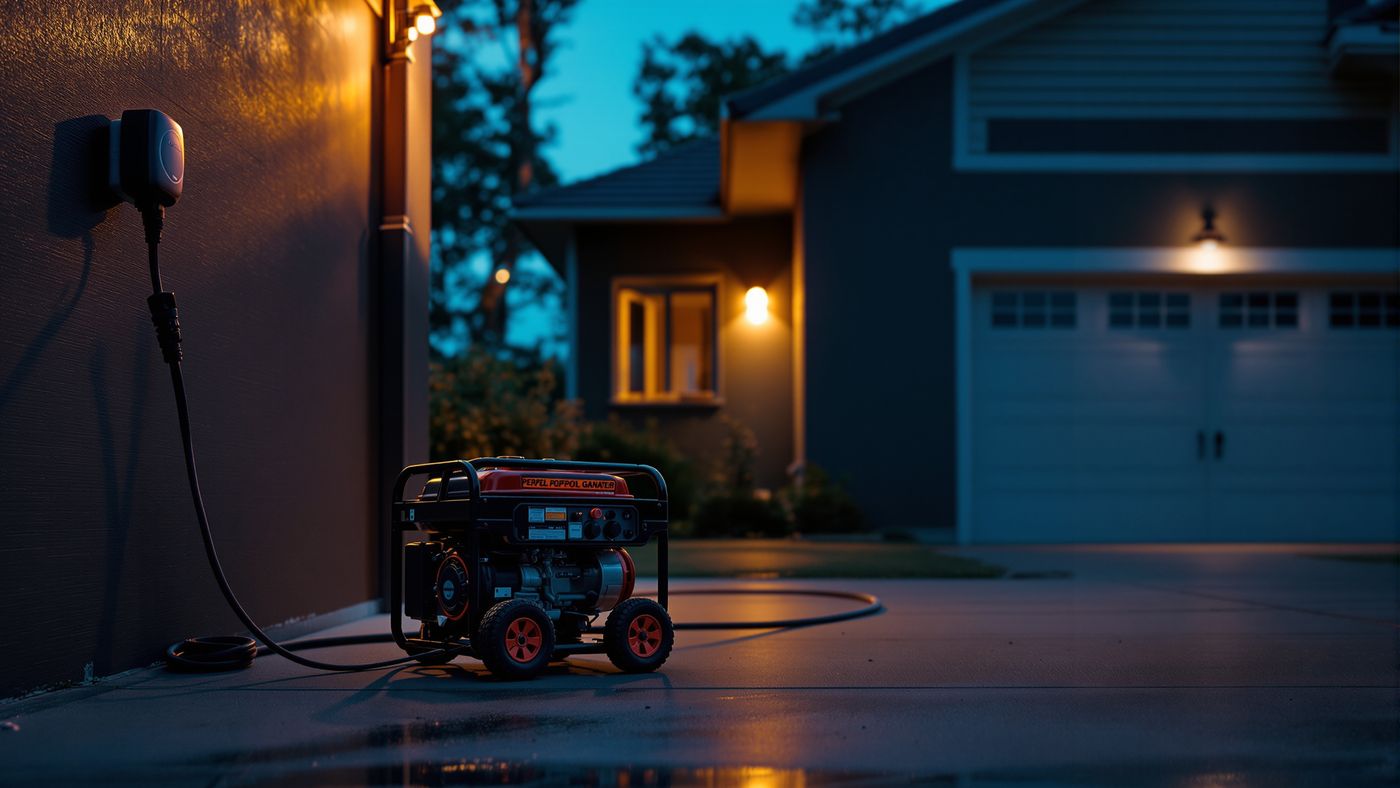
Placement is where generator safety is won or lost. A portable generator belongs outdoors on a dry, level surface, well away from the house and anything else that can burn.
- Keep it at least 20 feet / 6 metres from windows, doors, vents, and air intakes, and farther from sleeping areas.
- Point the exhaust away from the home and away from any neighbouring building.
- Never place it where exhaust can enter through a window, an open garage, a crawlspace vent, or a dryer vent.
- Do not run it in the rain without a purpose-built cover that still allows airflow - never enclose it in a way that traps exhaust.
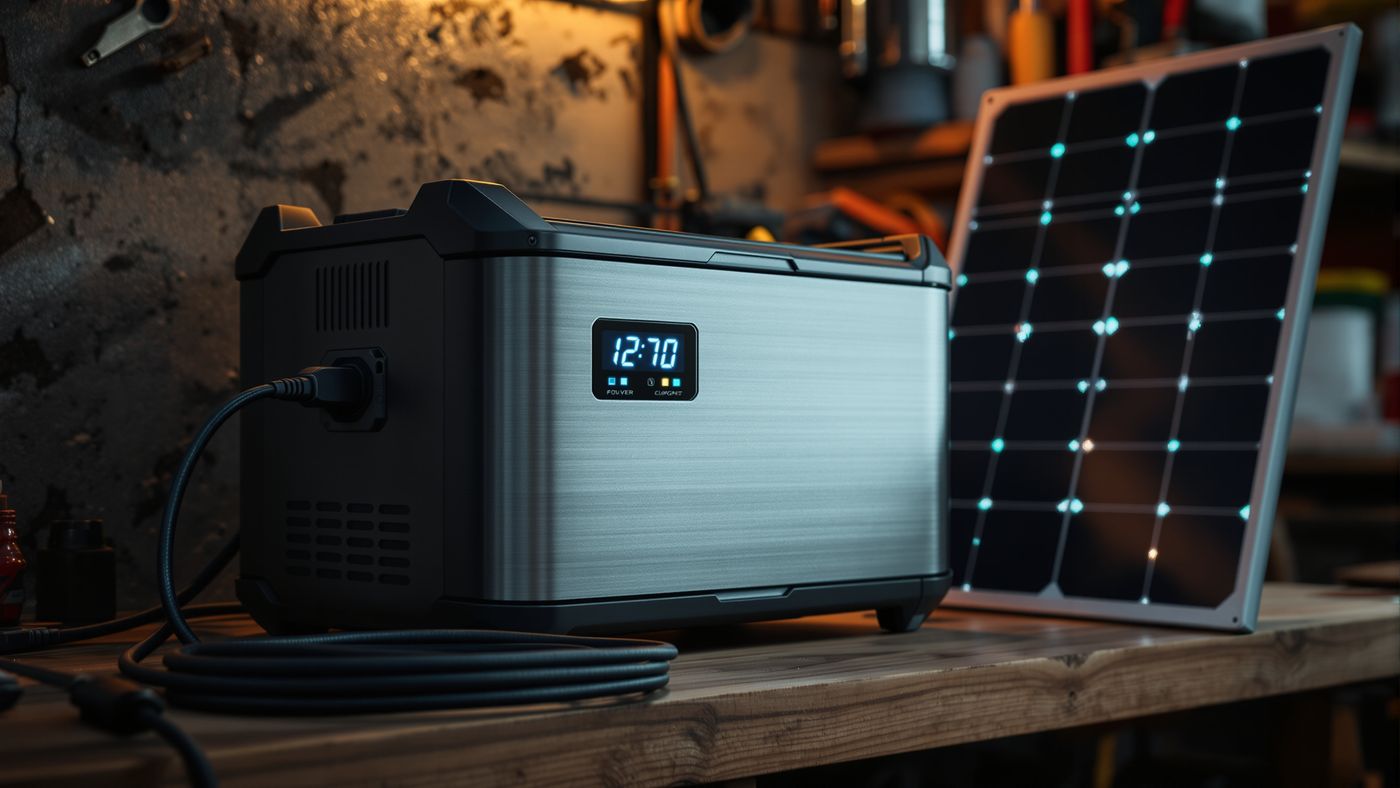
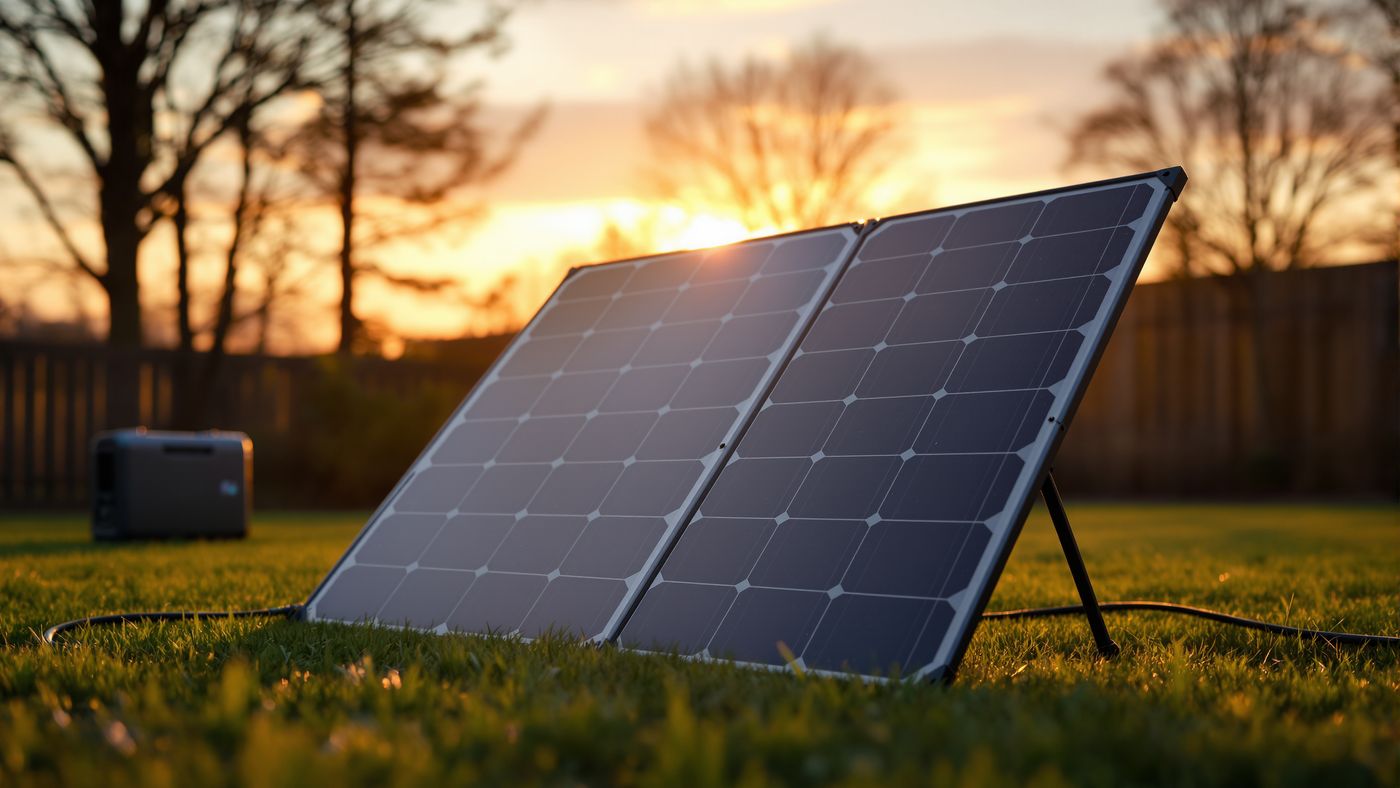
If you cannot place a generator safely - for example, in an apartment or a townhouse where the only outdoor space sits near windows - do not run a fuel generator. Choose a battery-based portable power station charged from the grid or solar instead.
Never Backfeed: Transfer Switches and Interlock Kits
Backfeeding means sending generator power into your home's wiring through an outlet, a dryer receptacle, or a double-male suicide cord. It is one of the most dangerous mistakes in generator use. It energizes wiring that is supposed to be dead, it can start fires, and it can send current back up the line and endanger a utility worker who thinks the line is off.
The safe ways to connect a generator to the house are:
- A transfer switch installed by a licensed electrician, which disconnects the home from the grid before generator power is applied.
- An interlock kit on the panel - installed by an electrician - that makes it physically impossible to have the main breaker and the generator breaker on at the same time.
- Plugging individual appliances directly into the generator with proper extension cords, the simplest safe option for a small portable unit.
Never use a double-male cord, never plug a generator into a wall or dryer outlet, and never trust a just-this-once workaround. The failure mode is fire and electric shock.
Cords, Fuel, and Grounding Done Correctly
Extension cords
- Use heavy-duty, outdoor-rated cords sized for the load and the distance - heavier gauge (lower number, such as 12 or 10 AWG) for longer runs and bigger loads.
- Keep cords as short as practical, protect them from water and crushing, and replace any cord that is frayed or warm to the touch.
- Do not daisy-chain cords, and do not run them under rugs, through doorways, or across standing water.
Grounding
Follow your generator's manual on grounding. Many portable units are designed with their neutral bonded and do not need a separate ground rod for standalone use, while some do. When a generator is connected through a transfer switch, grounding is handled as part of that installation.
Fuel
- Store gasoline only in approved containers, in a cool, well-ventilated place away from ignition sources, pilot lights, and living spaces.
- Never refuel a running or hot generator - shut it off and let it cool first.
- Use fresh fuel and add a fuel stabilizer for storage; stale fuel is a top reason a generator will not start.
- Store only what you can safely handle, and never store fuel inside the home.
Running and Maintaining Your Generator Safely
A generator is a small engine and rewards a little routine care. Before each outage season, and monthly during storage, run it briefly under a small load to confirm it starts and produces power. Change the oil and check the air filter and spark plug on the manual's schedule. Keep the unit and its cooling fins clean of dust and debris. When you run it, let it warm up before adding heavy loads, add loads one at a time, and shut off loads before stopping the engine. Never run a generator in an enclosed space, and never leave one running where its exhaust could reach sleeping areas.
Fuel Storage and Carbon Monoxide Alarms
Two things turn a generator from a tool into a hazard, and both are easy to manage. The first is fuel: gasoline vapours ignite easily, so approved containers, ventilation, and distance from any ignition source - including a water heater's pilot light or a running vehicle - are non-negotiable. The second is carbon monoxide: because you cannot smell it, you need a device that can. Install CO alarms on every level and outside sleeping areas, test them monthly, replace the batteries as directed, and replace the alarm unit itself by the date printed on it. A working CO alarm is the safety net that catches a placement mistake before it becomes a tragedy. Test them monthly, and never disable a chirping alarm.
A Generator Safety Checklist Before the Next Outage
Run through this list before each storm season.
- Confirm the generator sits outdoors, 20 feet / 6 metres from the home, with the exhaust pointing away.
- Check that CO alarms on every level work, and that everyone knows the signs of CO exposure.
- Verify your connection method - transfer switch, interlock, or direct cords - is safe and never a backfeed.
- Test-run the generator under a small load, and check the oil, fuel, and cords.
- Confirm fuel is stored in approved containers, stabilized, and away from ignition sources.
- Go over the plan with the household, including who starts the generator and where it goes.
Frequently asked questions
Can I run a generator in my garage if I leave the door open?
No. Carbon monoxide from a generator in an attached garage seeps into the living space through gaps and can harm people inside, even with the door open. The single most important generator safety rule is to generate power outdoors, at least 20 feet / 6 metres from the house, with the exhaust pointing away.
How far should a generator be from the house?
At least 20 feet / 6 metres from any window, door, vent, or air intake, and farther from sleeping areas. Point the exhaust away from the home and never let it vent toward an opening.
Can I plug a generator into a wall outlet or my dryer outlet?
Never. Doing so backfeeds the home's wiring, which can cause fires and can endanger a utility worker repairing the line. Connect through a transfer switch or interlock kit installed by a licensed electrician, or plug appliances directly into the generator with proper cords.
What size generator do I need to run my home?
Add the running watts of everything you want to run at once, then add the largest starting surge and a 20-25% margin. Because motors draw two to three times their running watts to start, run heavy loads like a well pump or furnace one at a time on a smaller unit.
Can I use an extension cord with a generator?
Yes, but use a heavy-duty, outdoor-rated cord sized for the load and distance, keep it as short as practical, and never daisy-chain cords or run them through water. A cord that is warm to the touch is overloaded.
How should I store gasoline for a generator?
In approved containers, in a cool, ventilated place away from ignition sources and outside living spaces, with a fuel stabilizer for storage. Never store fuel inside the home, and let the generator cool completely before refuelling.
What to do first
Before your next storm season, do four things: walk your generator to a spot at least 20 feet / 6 metres from the house with the exhaust aimed away, verify that your connection uses a transfer switch or interlock and never a backfeed, test-run the unit under a small load with fresh stabilized fuel, and test every carbon monoxide alarm. Generator safety is a short list of rules, followed every single time.