How to Store and Purify Water for Emergencies at Home
Clean water is the supply you notice last and depend on most. When a boil-water advisory, a broken main, or a prolonged outage interrupts the tap, having a safe reserve and a reliable way to purify more is what keeps a difficult week from becoming a dangerous one. The good news is that storing and treating water is inexpensive, low-tech, and well understood, so it is one of the easiest parts of household preparedness to get right.
This guide explains how much water to store, which containers are safe, where to keep them, and how often to rotate them. It then covers the main ways to purify water at home - boiling, bleach, tablets, and filters - and when each is the right choice.
The short version
- Store at least 1 gallon (about 4 litres) of water per person per day for drinking and basic hygiene.
- Use only food-grade containers; a clean 2-litre soda bottle is fine, a milk jug or old chemical pail is not.
- Keep stored water in a cool, dark place and replace it every 6 to 12 months.
- Boiling is the most reliable way to make questionable water safe: a rolling boil for 1 minute.
- Unscented household chlorine bleach and purification tablets work, but follow the dosing carefully.
- A filter rated for backcountry or emergency use removes sediment and many pathogens but is not a cure-all.
- Your water heater and toilet tank (not the bowl) can hold drinkable water in a pinch.
How Much Water to Store
The standard planning figure is 1 gallon (about 4 litres) per person per day, covering drinking plus a little for brushing teeth, cooking, and basic washing. It is a minimum, not a comfort target, so homes with pets, hot climates, or an infant should plan higher.
Guidance such as FEMA's Ready.gov and Canadian provincial emergency-management programs suggests a two-week supply for home use where possible, with a 72-hour supply as the minimum for a go bag.
Quick reference
| Duration | 1 person | Family of 4 |
|---|---|---|
| 3 days | 3 gal / 12 L | 12 gal / 45 L |
| 1 week | 7 gal / 26 L | 28 gal / 106 L |
| 2 weeks | 14 gal / 53 L | 56 gal / 212 L |
Do not let the two-week number discourage you. Start with three days and add a little at each grocery trip; thirty or forty litres in a closet is already a meaningful safety net.
Choosing Food-Grade Containers
The word food-grade is the whole game. Water in the wrong container can pick up chemicals from plastic or metal over time, so choose containers approved for drinking water.
- Best everyday option: sealed, commercially bottled water, which lasts the longest and needs no special handling
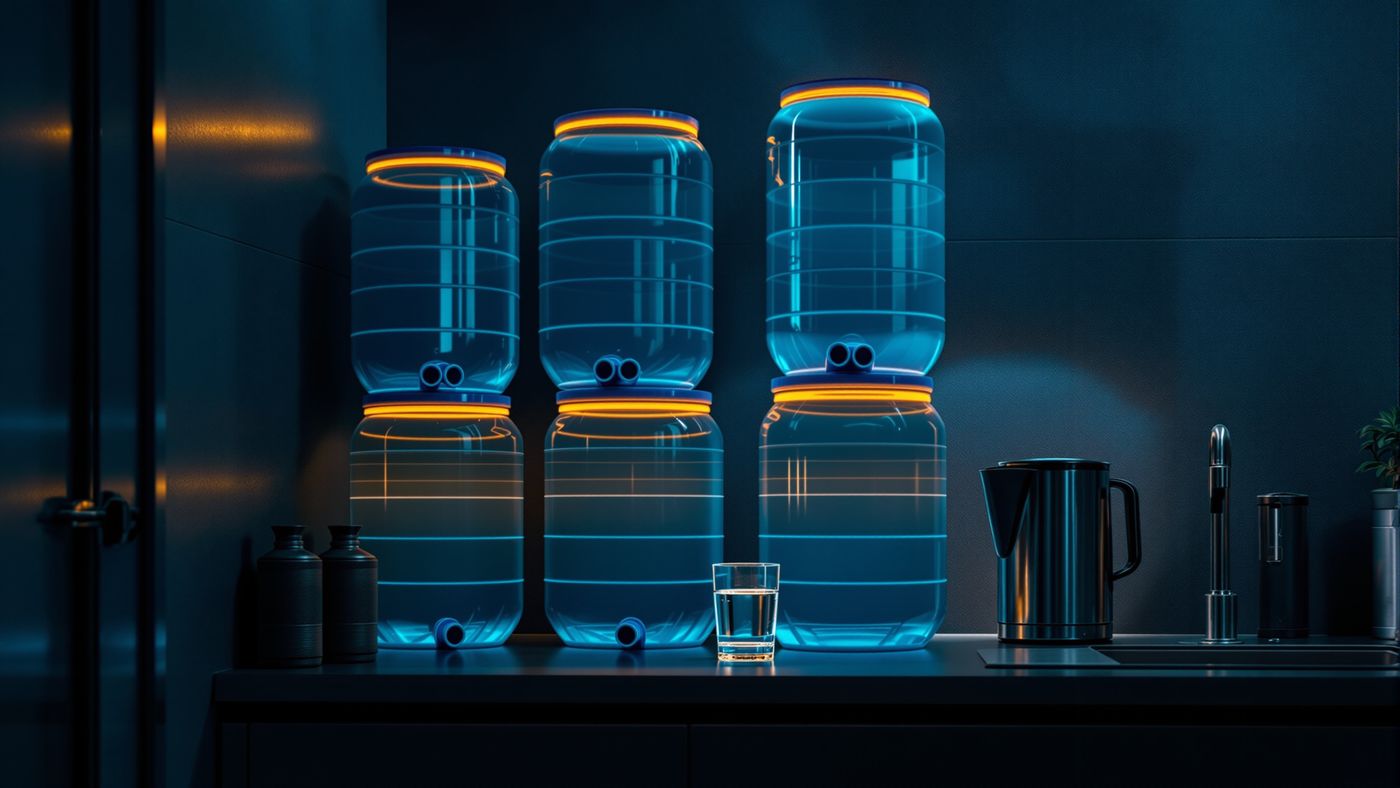
- Reusable: stackable water bricks or jerry cans made for drinking water storage
- Bulk: a food-grade 55-gallon (about 200-litre) drum, ideally with a pump, for a longer-term home reserve
- Improvised but safe: a thoroughly cleaned PET soda bottle (recycling number 1) refilled with treated tap water
Containers to avoid
Do not store drinking water in a milk jug, a sugary-drink bottle, or any pail that held chemicals or gasoline. These plastics are thin and hard to clean, so water spoils or picks up odours. Never use a container that does not clearly state it is food-grade.
Opaque containers are worth the small extra cost because light encourages algae and can degrade plastic. If a container is clear, store it out of the light.
This guide is part of the free The Ultimate Preppers Guide 2027 - 56 pages of checklists, tables and reference sheets you can print and keep.
Where and How to Store Water
Water is heavy - about 8.3 pounds per gallon (roughly 1 kilogram per litre) - so where you store it matters. Choose a cool, dark, dry place and keep containers off a bare concrete floor, which can leach odours and degrade some plastics.
Practical storage rules
- Keep water away from gasoline, paint, and other chemicals that give off fumes
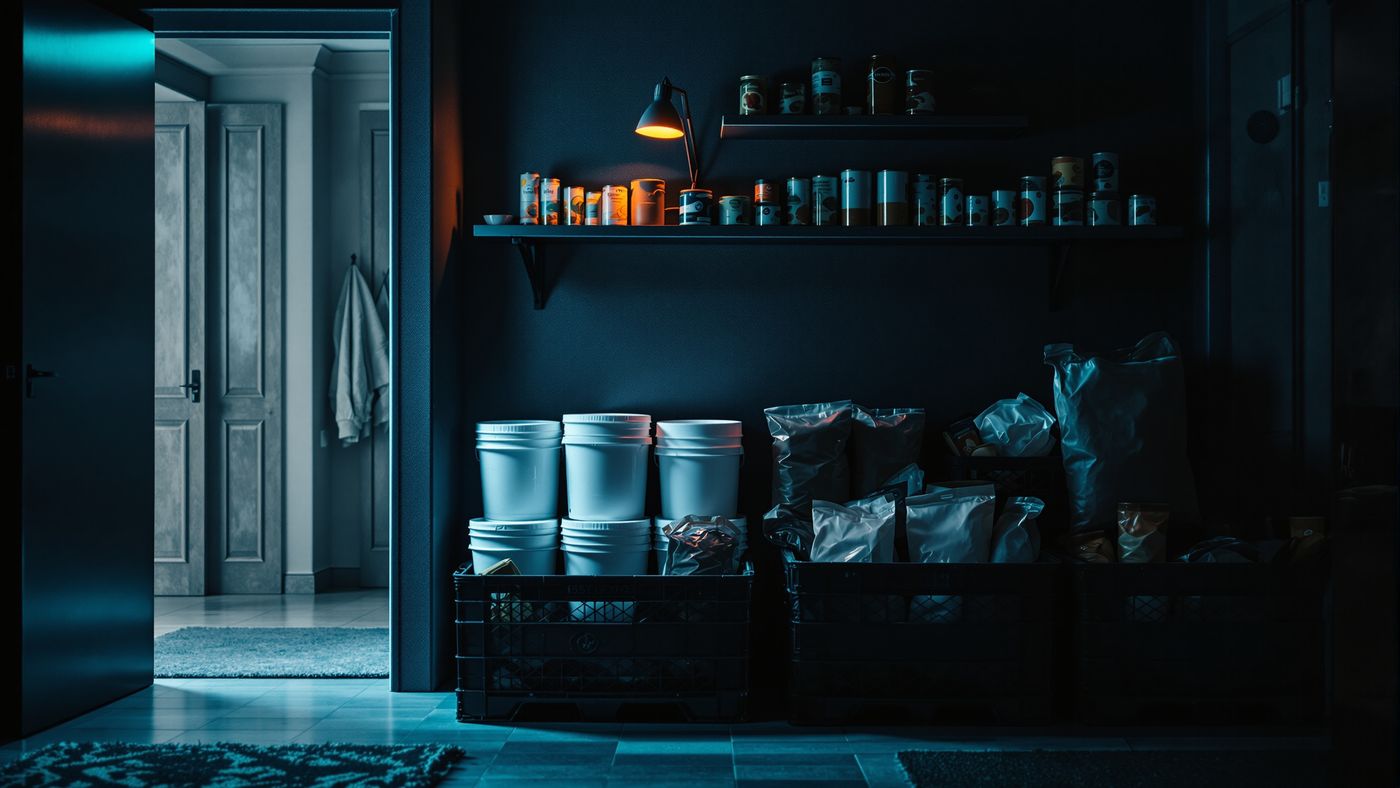
- Store containers on a shelf or pallet, not directly on a concrete slab
- Do not let water freeze solid in thin containers, which can split
- Spread water across more than one location so a single flood or leak does not take it all
Stack smaller containers rather than rely on one huge drum: they are easier to move and easier to rotate. Label each with the fill date so replacing water is a glance, not a memory test.
Rotating and Replacing Stored Water
Stored water does not stay fresh forever. Sealed bottled water keeps far longer than water you fill yourself, but the widely taught habit is to replace stored water every 6 to 12 months. Write the fill date on each container and treat replacement as routine.
A simple rotation routine
- Label every container with the month and year you filled it
- Once or twice a year, pour out the old water and refill with fresh, treated tap water
- Use the old water for plants or cleaning rather than dumping it
- Check sealed bottles for damage, cloudiness, or leaks at the same time
If water looks or smells off, do not assume it is safe because it was stored properly. When in doubt, treat it: the small effort of boiling or adding bleach beats the risk of illness.
Purifying Water: Boiling, Bleach, Tablets, and Filters
Purifying water means making it safe to drink by killing or removing pathogens. No single method is perfect, so it helps to know each one's strengths. Always remove sediment first, because grit can shield germs; pour through a clean cloth or coffee filter before treatment.
Boiling
Boiling is the most reliable method when you have fuel and a heat-safe pot. Bring the water to a rolling boil for 1 minute; above about 6,500 feet (2,000 metres), boil for 3 minutes. Let it cool naturally and do not add ice. Boiled water tastes flat because dissolved air is driven off, which is harmless.
Chlorine bleach
Plain, unscented household chlorine bleach, with no added fragrance or colour, can treat water. The commonly taught ratio is about 8 drops (roughly ⅛ teaspoon) per gallon (about 2 drops per litre) of clear water, and double that for cloudy water. Stir, then let it stand for about 30 minutes before drinking. Use only plain bleach; scented, splashless, or colour-safe products are not suitable.
Purification tablets
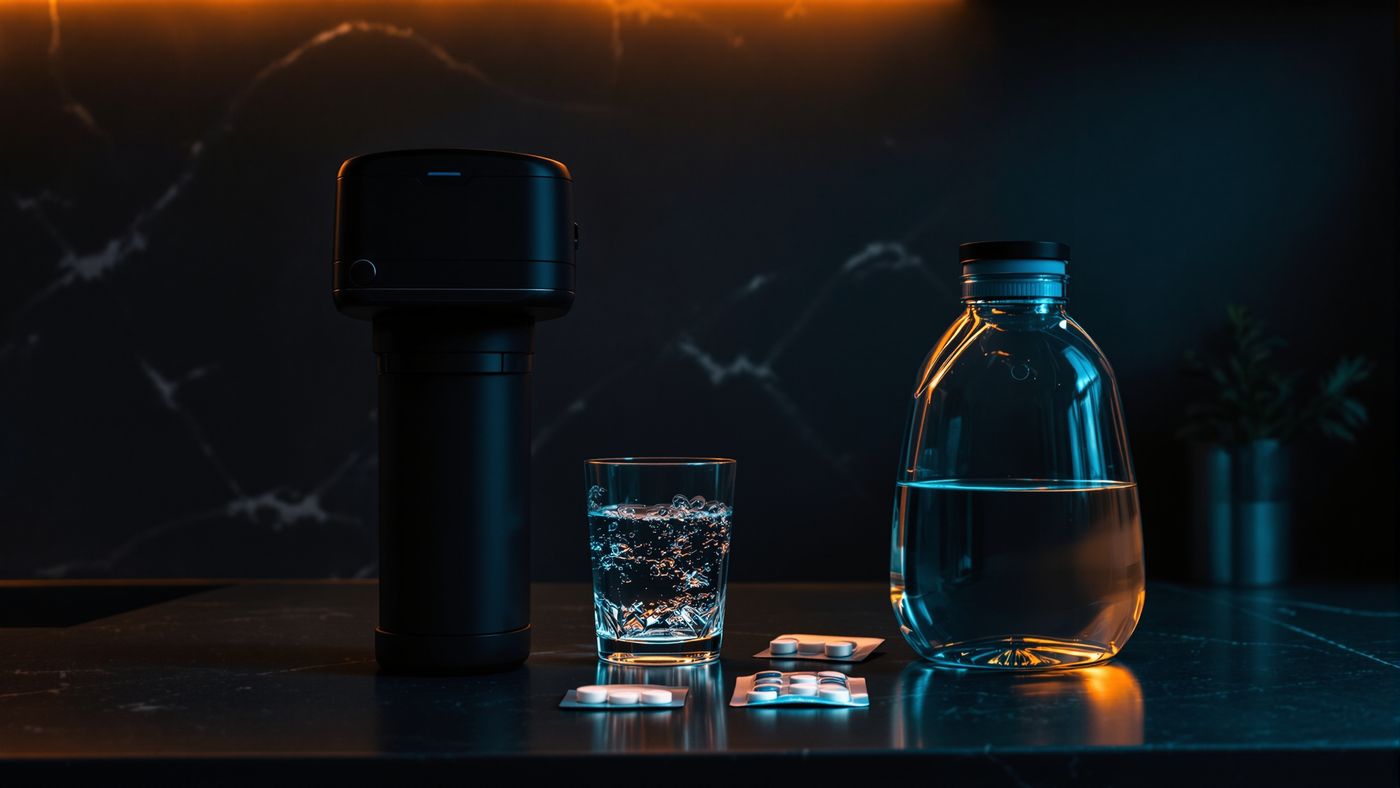
Tablets, usually iodine or chlorine dioxide, are lightweight and ideal for a go bag. They work against many pathogens but take longer than boiling, and the water needs to sit for a set time. Follow the package instructions exactly; iodine is not suitable for pregnant women or people with thyroid conditions.
Filters
Portable filters, usually hollow-fibre or ceramic, push water through a fine membrane that traps bacteria and protozoa. Look for an absolute pore size of 0.1 micron or smaller and NSF/ANSI 53 or 58 certification for cyst reduction. Most filters do not remove viruses, so where viruses may be present, follow filtration with boiling or chemical treatment.
Choosing a method
| Method | Strong at | Watch out for |
|---|---|---|
| Boiling | Killing all pathogens | Needs fuel and a pot; not portable |
| Chlorine bleach | Cheap, widely available | Dosing must be right; not effective against some parasites |
| Tablets | Lightweight, packable | Waiting time; iodine limits |
| Filters | Removing sediment and most germs | Usually will not remove viruses |
If you have more than one option, combine them: filter first to clear the water, then boil or chemically treat it. Layering methods is what backcountry and emergency guidance recommends when the source is uncertain.
Hidden Water Sources in Your Home
Even with a good reserve, it helps to know where else water hides. In an emergency, several ordinary places hold drinkable water.
- Your water heater: a typical home tank holds 30 to 50 gallons (about 110 to 190 litres) of usable water. Turn off the power or gas first, let it cool, then draw it from the drain valve.
- Toilet tank: the tank, not the bowl, holds clean water, provided you have not used a chemical bowl cleaner in it.
- Pipes and ice: the water already in your pipes and the ice in your freezer can be melted for drinking or cleaning.
- Rainwater and surface water: useful for washing and flushing, but it should always be treated before drinking.
After an outage, confirm local authorities have not issued a boil-water advisory before drawing from the heater or pipes, and follow your municipality's guidance.
Making Water Safe When the Tap Is All You Have
Sometimes the water runs but its safety is in question, often after a boil-water advisory. The tap is still your best source; you just need to treat what comes out before drinking.
If a boil-water advisory is issued
- Bring water to a rolling boil for 1 minute (3 minutes above 6,500 feet / 2,000 metres) and let it cool before use
- Use boiled or bottled water for drinking, brushing teeth, making ice, and preparing food and baby formula
- Safe water is not needed for bathing or washing clothes, as long as no one swallows it
- Follow the notice until the municipality formally lifts it
Keep the advisory advice from your water utility handy, so you are not searching for instructions mid-event. Knowing boiling is your default makes the first hour calm instead of chaotic.
Water is the least glamorous part of preparedness and one of the most valuable. A modest reserve, two safe containers, and one reliable purification method cover almost everything a household will face.
Frequently asked questions
How much water should I store for an emergency?
The standard figure is 1 gallon (about 4 litres) per person per day for drinking and basic hygiene. Start with a 72-hour supply and build toward two weeks if you can, adding a little at each grocery trip. Add extra for pets, hot weather, and household members who are pregnant, ill, or nursing.
What is the best way to purify water at home?
Boiling is the most reliable method: bring the water to a rolling boil for 1 minute (3 minutes above 6,500 feet / 2,000 metres). If you cannot boil, plain unscented chlorine bleach or purification tablets work well, and a filter with an absolute pore size of 0.1 micron or smaller removes sediment and most germs. Filter first, then disinfect, for the most uncertain sources.
Can I store tap water in old milk jugs or juice bottles?
No. Milk jugs and juice bottles are not made for long-term water storage: they are thin, hard to clean, and let water spoil or pick up odours. Use food-grade containers instead, such as sealed bottled water, water bricks, food-grade jerry cans, or a cleaned PET soda bottle for shorter-term use.
How often do I need to replace stored water?
Plan to replace stored water every 6 to 12 months. Label each container with the date you filled it and refill with fresh, treated water on a set schedule. Commercially sealed bottled water keeps much longer than water you fill yourself, but rotating on a six-to-twelve-month rhythm is a safe, simple habit.
Is bottled water or tap water better to store?
Both are fine if handled correctly. Commercially sealed bottled water is the easiest because it arrives clean and stays good the longest. Treated tap water stored in food-grade containers is cheaper for larger volumes; just label and rotate it every 6 to 12 months to keep it fresh.
Can I drink water from my water heater in an emergency?
Yes, as a backup. A typical tank holds 30 to 50 gallons (about 110 to 190 litres) of water. Shut off the power or gas, let the tank cool, and draw water from the drain valve. Treat it before drinking if you are unsure of its condition, and follow any local boil-water advisory in effect.
What to do first
Do the two-minute version today: count the people and pets in your home, multiply by 4 litres (or 1 gallon) per day, and buy that much sealed bottled water for a three-day reserve. Then pick one purification method - a pot for boiling or a filter with a 0.1-micron rating - and store it with the water so the two are always found together.