Best Portable Power Stations for Home Backup
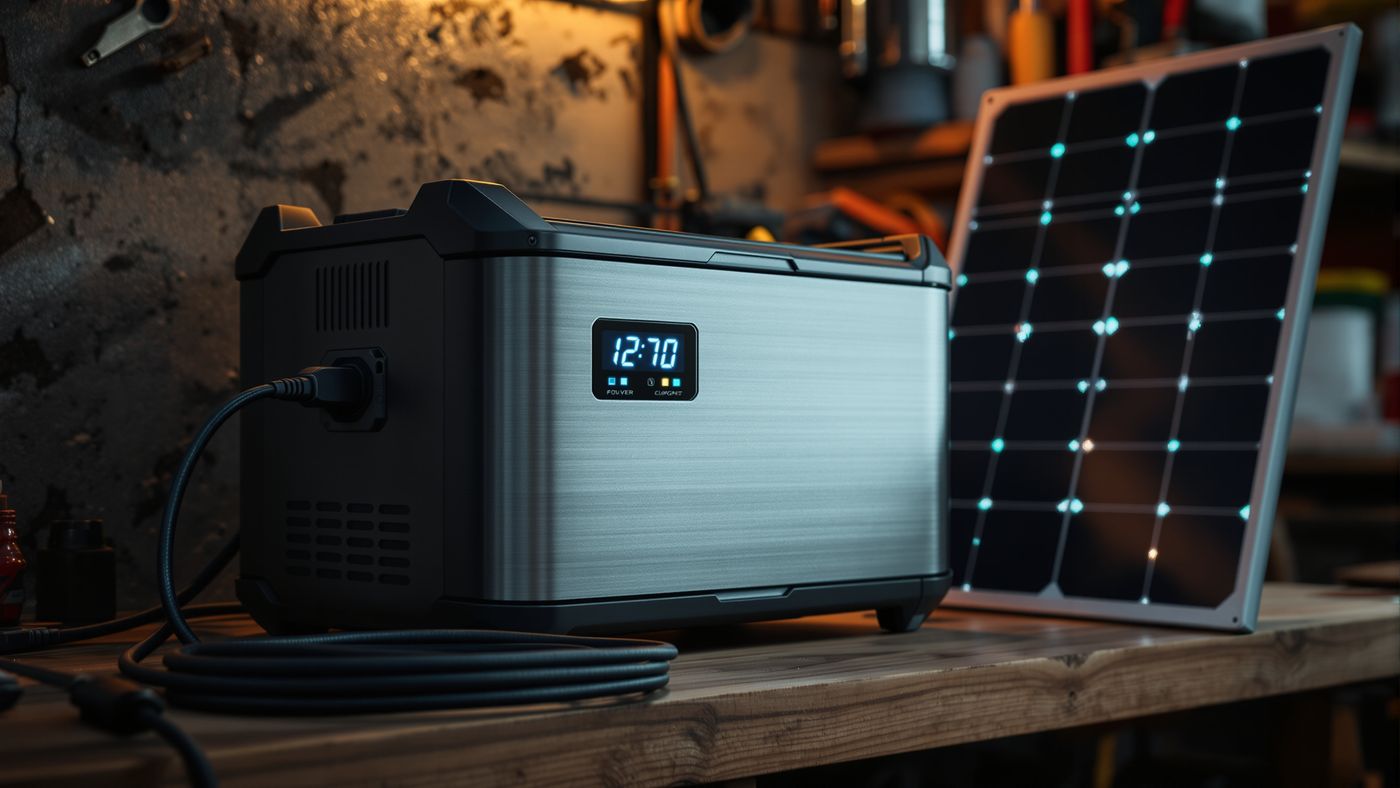
A portable power station is one of the most useful pieces of home-backup gear you can own. It needs no fuel, runs silently, can be used indoors, and can keep a fridge, a Wi-Fi router, phones, and a few lamps running through a short outage - or travel with you to a campsite or a tailgate. Unlike a gas generator there is no exhaust, no pull cord, and no annual maintenance ritual. The trade-off is that you are storing a limited amount of energy in a battery, so getting the size and the battery chemistry right matters far more than the shiny extras on the box.
This guide is written for homeowners and families who want a power station that earns its keep during an outage, not just a spec sheet that looks impressive in a store. We walk through the arithmetic of capacity and runtime, the difference between conventional lithium-ion and LiFePO4 batteries, why inverter and surge ratings decide what your station can actually start, how solar recharging performs in the real world, and which well-known product families are worth a closer look. Every recommendation here is based on published specifications and the track record of established brands - this is an experienced buyer's guide, not a lab test and not affiliate noise.
We do not run our own laboratory tests, and we do not pretend to. This guide is built the way a careful buyer would build it: by reading published specifications, understanding the engineering trade-offs behind them, and leaning on the reputation of brands that have been shipping power stations for years. When a decision comes down to a precise figure - an exact watt-hour number, a current price, or a peak surge rating - the honest answer is that it varies from model to model and season to season, so we describe broad classes and tell you to check the current model specs on the manufacturer's page before you buy.
We weight the things that actually decide whether a station is useful during an outage: real usable capacity rather than the marketing number, battery chemistry and cycle life, continuous versus surge output, recharge speed from the wall and from solar, the number and type of ports, and how easy the unit is to lift, store, and live with. We favour brands with a long track record, clearly published specifications, and accessible customer support, and we do not rank by price alone.
Our picks
EcoFlow DELTA Series
Typical price band: $500-2,500
The EcoFlow DELTA family is the pick most households should shortlist first. It sits in the sweet spot where capacity, output, and recharge speed all line up: models typically land in the 1,000Wh to 2,000Wh class with AC output that can comfortably run a fridge, a modem, laptops, a fan, and lighting at the same time. EcoFlow's signature strength is very fast AC recharging - on many models you can refill the battery from a wall outlet in a little over an hour, which matters enormously when a storm is forecast and you want a full charge before it arrives.
- A good match for whole-household short outages and for carrying a fridge plus electronics.
- Expandable battery options on some models let you grow capacity later.
- Broad port selection, app monitoring, and UPS-style pass-through on many units.
Where it gives ground is price and weight: the larger models are heavy and not cheap. Compare the specific model's watt-hour rating and output against your loads, and check the current model specs before committing.
- Typical capacity1,000Wh-2,000Wh class (varies by model)
- Battery chemistryLiFePO4 on newer models
- AC output1,000W-2,400W class
- RechargeFast AC wall charging; solar-capable
- PortsMultiple AC, USB-C PD, USB-A, 12V
- Best forWhole-home short outages
Pros
- Very fast wall recharge on many models
- Expandable capacity options
- Strong port selection and app control
Cons
- Larger models are heavy
- Premium pricing at higher capacities
- Exact specs vary widely between models
Affiliate link - we may earn a commission at no cost to you.
Jackery Explorer Series
Typical price band: $200-2,000
Jackery Explorer is the name most people think of first, and for good reason: the line is broad, widely stocked, and easy to understand. You can pick a small Explorer for charging phones and running a lamp, or step up to a large one that will carry a fridge and a few appliances through a multi-hour outage. The brand is known for simple, dependable units, clear controls, and a genuinely useful accessory ecosystem of folding solar panels, carrying cases, and expansion batteries.
It is the value pick because the entry and mid-tier models tend to offer the most capability per dollar, and the whole line is easy to find on sale. Where it can fall behind the fastest-charging rivals is wall-recharge speed on some models, and the largest units climb in price quickly.
- An excellent starting point for a first power station.
- A huge range of sizes, so you can match capacity to your real loads.
- A mature solar-panel ecosystem for off-grid recharging.
Match the model's watt-hours and output to your loads, and check the current model specs.
- Typical capacity300Wh-2,000Wh+ class across the line
- Battery chemistryLiFePO4 on newer models; lithium-ion on some older ones
- AC output300W-3,000W class
- RechargeAC wall and solar
- PortsAC, USB-A/C, 12V car port
- Best forFirst-time buyers and mid-size backups
Pros
- Widely available and often discounted
- Huge range of sizes to choose from
- Simple to use, with a strong accessory line
Cons
- Slower wall recharge on certain models
- Top capacities get expensive
- Battery chemistry varies by model
Affiliate link - we may earn a commission at no cost to you.
Anker SOLIX Series
Typical price band: $200-1,500
For apartment and condo dwellers the priorities are different: you want something compact, quiet, safe to run indoors, and easy to lift into a closet or a car. The Anker SOLIX line, including its smaller C-series units, fits that brief well. Anker built its reputation on charging accessories and power banks, and that shows in tidy build quality, straightforward apps, and units that charge fast and store easily. Several models use LiFePO4 chemistry, the more durable and thermally stable option.
- Compact sizes suited to small living spaces and quick storage.
- Good for routers, phones, laptops, a lamp, and a small fan.
- Solar recharge and expansion options on many models.
Because apartment loads are smaller, a mid-size unit is usually plenty - but it will not run a full-size fridge or a space heater. Size to your real needs and check the current model specs.
- Typical capacity500Wh-1,500Wh class
- Battery chemistryLiFePO4 on many models
- AC output500W-1,500W class
- RechargeFast AC wall and solar
- PortsAC, USB-C PD, USB-A, 12V
- Best forApartments and small-space backup
Pros
- Compact, storable designs
- Fast charging and tidy apps
- LiFePO4 on many models
Cons
- Smaller capacities limit what you can run
- Not intended for large appliances
- A full-size fridge may exceed budget units
Affiliate link - we may earn a commission at no cost to you.
Bluetti Portable Power Stations
Typical price band: $300-3,000
Bluetti is the runner-up that a lot of enthusiasts actually buy. The brand has pushed LiFePO4 chemistry across its range and is known for offering generous capacity and expandability at competitive prices, including some genuinely large units aimed at whole-home and off-grid use. If your plan is to build a system that grows - adding battery modules, running a transfer switch, or pairing serious solar - Bluetti's modular families deserve a close look.
- Strong LiFePO4 adoption and long cycle-life claims across the line.
- Expandable families for people who want to add capacity later.
- Competitive pricing at higher capacities.
The flip side is a large, sometimes confusing model range and fewer big-box retail channels than the biggest names. Do your homework on the exact model's output and surge rating, and check the current model specs.
- Typical capacity600Wh-3,000Wh+ class
- Battery chemistryLiFePO4 on most current models
- AC output600W-3,000W class
- RechargeAC, solar, and car charging
- PortsAC, USB-C PD, USB-A, 12V/30A
- Best forExpandable and off-grid setups
Pros
- LiFePO4 across most of the line
- Expandable battery families
- Good capacity per dollar
Cons
- Large, sometimes confusing range
- Fewer retail channels
- Surge specs need careful checking
Affiliate link - we may earn a commission at no cost to you.
Goal Zero Yeti Series
Typical price band: $300-3,000
The Goal Zero Yeti line is the premium option, with a track record in portable power that predates most of today's competitors. Yeti stations are known for sturdy build quality, clean integration with Goal Zero's own solar panels and accessories, and a reputation built over years of outdoor and emergency use. If you value a mature, well-supported ecosystem and are willing to pay for it, Yeti is worth the premium.
- A long-established brand with a deep accessory ecosystem.
- Solid build and intuitive controls.
- A good fit for anyone who wants one integrated solar-plus-station system.
You will pay more per watt-hour than with value-focused brands, and the larger units are heavy. Confirm the specific model's capacity and output, and check the current model specs.
- Typical capacity400Wh-3,000Wh+ class
- Battery chemistryVaries by model, including LiFePO4 on newer units
- AC output300W-2,000W+ class
- RechargeAC wall, solar, car
- PortsAC, USB-A/C, 12V, some with Anderson
- Best forPremium integrated solar setups
Pros
- Mature, well-supported ecosystem
- Durable build quality
- Broad accessory compatibility
Cons
- Higher price per watt-hour
- Heavier large units
- Value brands beat it on raw specs per dollar
Affiliate link - we may earn a commission at no cost to you.
What actually matters
Sizing a Portable Power Station: Watt-Hours and Real Runtime
The number that matters most is usable capacity, measured in watt-hours (Wh). A station's ability to run a given device is simple arithmetic: runtime (hours) = usable watt-hours ÷ the device's continuous watts. A 60W fridge would run for roughly sixteen hours on a 1,000Wh station in theory, but real-world efficiency losses and the fridge's start-and-stop duty cycle mean you should plan for less than the textbook figure.
- Add up the watts of everything you want to run at once - that is your load.
- Estimate how many hours you need that load to run.
- Multiply watts by hours to get the watt-hours you need, then add a margin.
Also check the usable-capacity figure rather than the headline number, because some brands quote total battery capacity that is not all available at the outlets.
Lithium-Ion vs LiFePO4 in Portable Power Stations
Most power stations use one of two lithium chemistries, and the choice affects lifespan, safety, and price.
- Conventional lithium-ion (NMC): lighter and often cheaper for a given capacity, but typically rated for fewer charge cycles and slightly more sensitive to heat.
- LiFePO4 (lithium iron phosphate): heavier for the same capacity, but typically rated for many more charge cycles, holds up better over years of use, and is more thermally stable. It has become the default in mid-range and premium stations.
If you plan to cycle the battery regularly and keep the station for a decade, LiFePO4 is usually worth the extra weight and cost. If you only need occasional backup and prioritise light weight, conventional lithium can be fine. Cycle-life figures are brand claims, so check the current model specs.
Inverter Ratings: Continuous vs Surge Watts
A station's AC output is rated two ways, and both matter. Continuous watts is what it can supply indefinitely; surge (peak) watts is a short burst it can deliver for a few seconds to start a motor-driven device.
- Anything with a motor or compressor - a fridge, a freezer, a pump - briefly draws several times its running watts when it starts, so surge headroom is essential.
- Resistive loads such as a lamp, a laptop charger, or a fan draw steady power, so continuous watts is the number that matters for them.
- Sine-wave quality matters too; a pure sine-wave inverter is the safer choice for sensitive electronics.
A station that cannot cover the surge of a fridge will simply shut off when the compressor kicks in, no matter how much capacity remains.
Recharging Your Portable Power Station: Wall Speed and Solar Reality
Two numbers decide how quickly a station is useful again: wall-recharge time and solar-input capability.
- Wall recharging: some brands charge roughly ten times faster than others. Fast wall charging is a genuine advantage before a forecast storm.
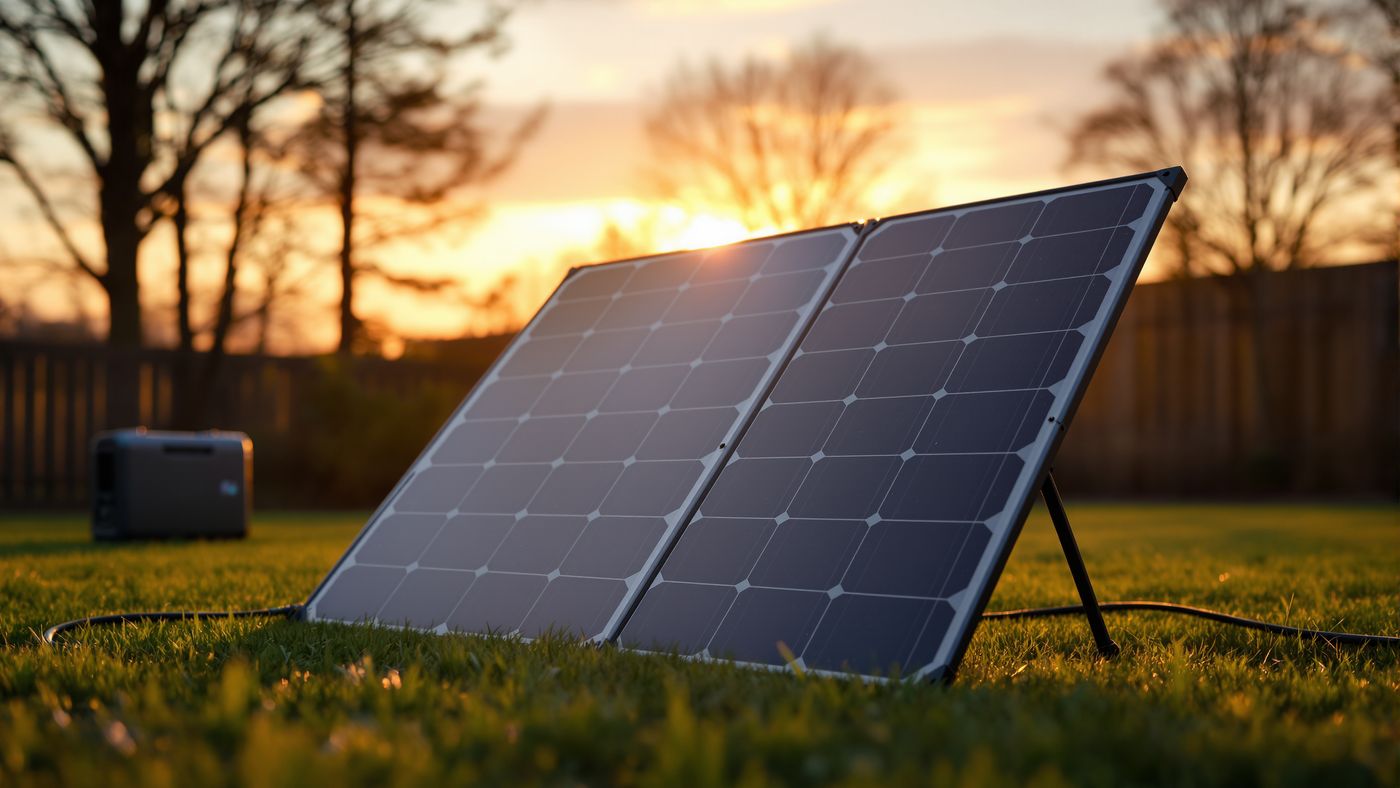
- Solar recharging: is limited by physics. A folding panel only produces its rated output in strong, direct sunlight, so a full recharge can take a long time and is best treated as a way to top up rather than refill from empty.
- Pass-through / UPS mode: lets the station sit plugged into the wall and switch over automatically, which is ideal for a router or a modem.
Plan to charge before an outage rather than relying on solar to recover during one.
Frequently asked questions
How many watt-hours does a portable power station need to run a fridge?
Start with the fridge's running watts (often a few hundred watts, though larger models draw more) and remember it cycles on and off rather than running continuously. A typical household fridge needs a station with enough surge headroom to start the compressor plus enough capacity to run it for the hours you want to cover - commonly a 1,000Wh-class station or larger. Check your fridge's label and the current model specs, and add a margin for efficiency losses.
Is LiFePO4 worth it in a portable power station?
Often, yes. LiFePO4 batteries are typically rated for many more charge cycles than conventional lithium-ion, tolerate heat better, and are more thermally stable. If you will cycle the battery regularly and keep the station for years, the longer lifespan usually justifies the higher price and extra weight. For occasional backup only, a cheaper lithium-ion model may be perfectly adequate.
Can I run a space heater or a sump pump on a portable power station?
Usually not for long. Space heaters draw enormous wattage, so they drain even a large battery within minutes. Sump pumps and well pumps are also power-hungry and need surge headroom to start. Both are better served by a fuel generator or a permanently installed home-battery system. A power station can run lights, electronics, a fridge, and fans far more efficiently.
How do I recharge a portable power station during a long outage?
Charge the station before the outage - that is the most reliable plan. During an outage, solar panels can top it up in good sunlight, but a full recharge from empty is slow and weather-dependent. Some owners keep a small inverter generator to recharge the station, which combines quiet indoor use with fuel-powered refuelling. Pass-through or UPS mode lets a station that stays plugged in keep essential devices running automatically.
What to do first
Start by listing the loads you genuinely want to keep running in an outage and roughly how many hours you need to cover. That list gives you a target watt-hour figure. Then narrow to two or three stations in that class, check the current model specs for usable capacity, surge output, and recharge speed, and confirm the weight is something your household can actually move. Charge it fully once it arrives, run a short test with your fridge or router, and you will know before the next storm exactly what your backup can do.
Not sure where this item fits in the bigger picture? The free The Ultimate Preppers Guide 2027 has the full priority order and printable checklists.