Home Security Basics: Layered Defence That Works
Home security does not start with a camera or an app. It starts with the quiet, physical things that make a house harder to enter and less appealing to target - solid doors, working locks, good light, and simple daily habits. Most break-ins are crimes of opportunity, and the goal of home security basics is to remove the opportunity.
This guide lays out a layered approach that works for houses, townhomes, and apartments in the U.S. and Canada: what to fix on doors and windows first, how lighting and landscaping change the odds, how to use alarms and cameras without wasting money, and a simple family plan for the moment something happens.
The short version
- Start with the layer that stops entry: a solid door, a deadbolt with a full 1-inch (25 mm) bolt throw, and a reinforced strike plate secured with 3-inch screws.
- Trim shrubs below windows to about 2 feet / 60 cm and keep tree limbs clear of upper floors so no one has cover near an entry.
- Use exterior lighting at doors, the garage, and dark side yards to remove the shadows intruders prefer.
- Lock up every time, even for short trips; unlocked doors and windows remain one of the easiest ways in.
- Make the home look occupied when you are away: hold mail, use timers on lights, and ask a neighbour to watch the property.
- Have a family plan that prioritizes getting out and calling for help over confronting anyone.
What Home Security Basics Really Means: Layers, Not Gadgets
Professionals think about security in layers. The idea comes from a field called Crime Prevention Through Environmental Design, or CPTED, and the principle is simple: each layer buys time, and time is what you actually want. The outer layers make your home look harder and less rewarding to target. The middle layers slow someone down if they try. The inner layers - alarms and your family plan - matter most when the first two fail.
This is why the order of spending matters. A good deadbolt and longer screws on the right door will do more than a camera that simply records an intruder walking in. Home security basics are mostly unglamorous, inexpensive, and installed once.
The four layers
- Deter: light, sightlines, signs of activity, and the visible fact that entries are solid.
- Delay: locks, reinforced hardware, and barriers that slow forced entry.
- Detect: alarms, cameras, and motion lights that tell you something is wrong.
- Respond: a rehearsed family plan, a safe place to go, and a call to emergency services.
Doors Are the First Layer: Deadbolts, Strike Plates, and Hinges
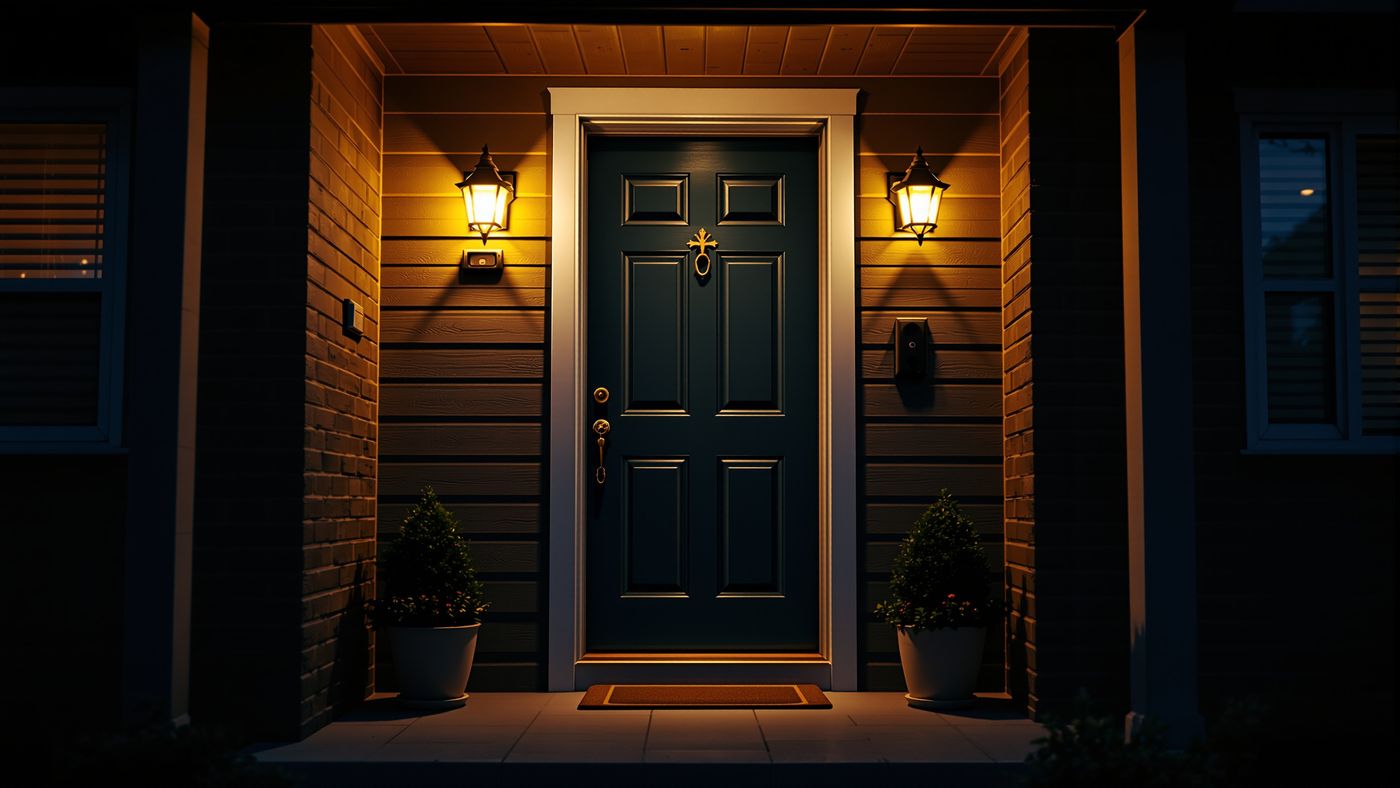
Most people who force their way into a home go through a door - usually the front door, and often with a hard kick. The weak point is rarely the lock itself; it is the frame and hardware around it. Sealing that weakness is the highest-value work in home security basics.
- Deadbolt: fit a keyed or thumb-turn deadbolt with a full 1-inch (25 mm) bolt throw. That extra length is what resists a shove.
- Strike plate: use a heavy-duty strike plate and drive 3-inch (75 mm) screws through it into the wall stud, not just the soft frame. This single step defeats most kicks.
- Hinges: on doors that swing outward, use security hinges or hinge pins, or the door can be lifted off.
- The door itself: a solid-core or solid-wood door beats a hollow one; if the door is flimsy, hardware upgrades have limited value.
- Peephole or video doorbell: a safe way to see who is there without opening up.
Also secure secondary doors - side entries, basement doors, and the door between the garage and the house - because they are often flimsier and better hidden. A door from the garage is a common and quiet way in.
This guide is part of the free The Ultimate Preppers Guide 2027 - 56 pages of checklists, tables and reference sheets you can print and keep.
Windows and Sliding Doors
Windows are the second most common entry point. The goal is not to make your home a fortress; it is to make entry slow, noisy, and obvious.
- Fit working locks on every opening window, and use them.
- For sliding patio doors, place a metal or wooden bar in the track or a pin above the latch - a standard latch alone can often be lifted out.
- For older single-hung windows, a pin or dowel in the track prevents the sash being lifted.
- Ground-floor windows near a fence, shed, or tree are highest risk; make sure they lock and stay visible from the street.
- Do not leave a window open a crack as a vent when you leave the house - it is an invitation.
Glass breakage is possible, but it is loud and slow. The point of window security is to make the noisy options the only ones, so anyone seeking a quiet entry moves on.
Lighting, Landscaping, and Removing Cover
Darkness is an intruder's best tool. Exterior lighting is one of the cheapest and most effective improvements you can make, and it doubles as safety lighting for you and your guests.
Lighting
- Put lights at every entry and over the garage, and consider motion-activated lights on dark side yards and rear doors.
- Solar and LED fixtures make this inexpensive and require no wiring.
- Keep a light on inside on a timer so the house is never fully dark.
Landscaping and sightlines
- Trim shrubs below windows to about 2 feet / 60 cm so they cannot hide anyone.
- Keep the lower branches of trees clear of upper-floor windows and roofs.
- Keep fences, gates, and sheds locked, and do not leave ladders or tools outside where they can be climbed or used to break in.
- Avoid dense, tall hedges along paths that lead to a hidden entry.
The principle is called natural surveillance: you want your home and its entries visible from the street and from neighbours' windows. A house that can be watched is harder to break into without being seen.
Alarms, Cameras, and Signs: Using Home Security Basics Wisely
Alarms and cameras are valuable, but they sit in the detect layer, which means they should come after doors, locks, and light. Sold well, they are also the most expensive part of home security basics for the least structural benefit.
Alarms
- A monitored alarm that contacts you and a monitoring centre adds real value when you are away.
- If you go unmonitored, at least use door and window sensors that sound a loud local siren.
- Signs and window decals - even from a DIY system - can nudge a casual intruder to pick a different house.
Cameras
- Cover entries, driveways, and the rear door, where intruders actually approach.
- Keep recordings backed up or in the cloud so a stolen device does not take the evidence with it.
- Check your local laws on audio recording and on pointing cameras at a neighbour's property.
Reset default passwords on any connected device and keep firmware updated - a camera still using the factory password is a risk to you, not just a tool.
Daily Habits That Matter More Than Hardware
Half of practical home security is habit. Even the best locks are useless left unlocked, and a home that looks empty is the one most likely to be chosen.
- Lock doors and windows every time you leave, and lock up at night - including the garage and any connecting door.
- Do not announce travel on social media until you are home; post the trip afterwards, not during.
- Hold mail and pause deliveries when you are away, or have a neighbour collect them.
- Use timers on interior lights and a radio or TV to simulate activity.
- Do not hide a spare key under the mat, in a fake rock, or on a hook by the door - give a copy to a trusted neighbour instead.
- Know your neighbours and regular delivery people, and report unfamiliar vehicles or people loitering.
Garages, Sheds, and Outbuildings
The garage is the most overlooked entry in home security basics. It often holds tools that can be used against your own house, and a garage-door remote left in a car - or an opener code that has never been changed - gives easy access. A door opener is not a lock. Keep the door between the garage and the house locked and solid, close the main garage door even when you are home, and use the opener's lock feature or a manual latch. In sheds and outbuildings, lock up ladders, tools, and anything that could be used to climb or pry, and light the approach so the door is not hidden in shadow. Change the factory code on any automatic garage-door opener, and consider a smart opener that alerts you when the door opens.
If Someone Tries to Get In: A Simple Family Plan
Talk this through before you ever need it, so no one has to think in the moment. The guiding principle is simple: your safety is worth more than any possession.
- Get out if you can. If there is a clear path, leave and call 911, or your local emergency number, from a safe place.
- If you cannot leave, get to a room you can lock and call for help. Stay quiet and stay on the line.
- Do not confront an intruder. Property can be replaced; people cannot.
- Teach children to call for help, not to open the door to strangers, and where to go if they feel unsafe.
- Once you are safe, do not re-enter until police say it is clear, and document any damage for insurance.
If you choose to keep anything for protection, store it securely, follow all local laws, and treat it as a last resort - never as a reason to go looking for a confrontation.
Neighbours, Community, and Asking for Help
Security is a neighbourhood sport. Neighbours who know each other's routines, vehicles, and travel plans notice when something is off, and a casual, friendly neighbourhood watch is one of the oldest and most effective tools there is. Introduce yourself, swap numbers with the people who can see your front door, and offer to watch their home when they travel in exchange for the same. Report suspicious activity to police rather than confronting it yourself. If cost is a barrier, many police services offer free home-security assessments, and local programs sometimes provide free or discounted locks and lighting. A simple group chat for the street is often enough to keep everyone informed.
Frequently asked questions
What is the single most effective home security upgrade?
Reinforcing the front door: a solid door, a deadbolt with a full 1-inch (25 mm) throw, and a heavy strike plate fastened with 3-inch screws into the stud. Most forced entries are kicks at doors, and this defeats them cheaply.
Are security cameras worth it?
They help with detection and evidence, especially when you are away, but they rarely stop a determined intruder. Treat cameras as one layer and spend on doors, locks, and lighting first, where the return per dollar is higher.
Is a monitored alarm system worth the monthly fee?
If you travel often or want confirmation that someone is watching when you are not, monitoring can be worthwhile. If you are usually home and budget is tight, a loud local siren plus good locks and habits covers much of the risk for far less.
How do I make my home look occupied while away?
Use timers on interior lights, pause mail and deliveries or have a neighbour collect them, keep a radio or TV on a timer, and ask a trusted neighbour to watch the property. Avoid posting travel plans on social media until you are back.
I rent my home - what home security basics can I still do?
Plenty. You can add window and door sensors, a video doorbell that clamps on, plug-in timers, motion lights that need no wiring, and better habits. Ask your landlord before permanent changes such as new locks or a reinforcement plate.
Which home security basics should every family set up first?
Solid doors with good deadbolts and reinforced strike plates, working window and patio-door locks, exterior lighting, trimmed sightlines, and consistent lock-up habits. Add detection - alarms and cameras - only after those basics are in place.
What to do first
Start with a walk-around tonight: check that every exterior door has a working deadbolt and a strike plate held by 3-inch screws, lock every window, and trim anything growing in front of a ground-floor window. This week, add a timer to a living-room lamp and swap numbers with the neighbour who can see your front door. Those few steps put every layer of home security basics to work - quietly, affordably, and without turning your home into a fortress.