Best Portable Solar Panels and Solar Generators
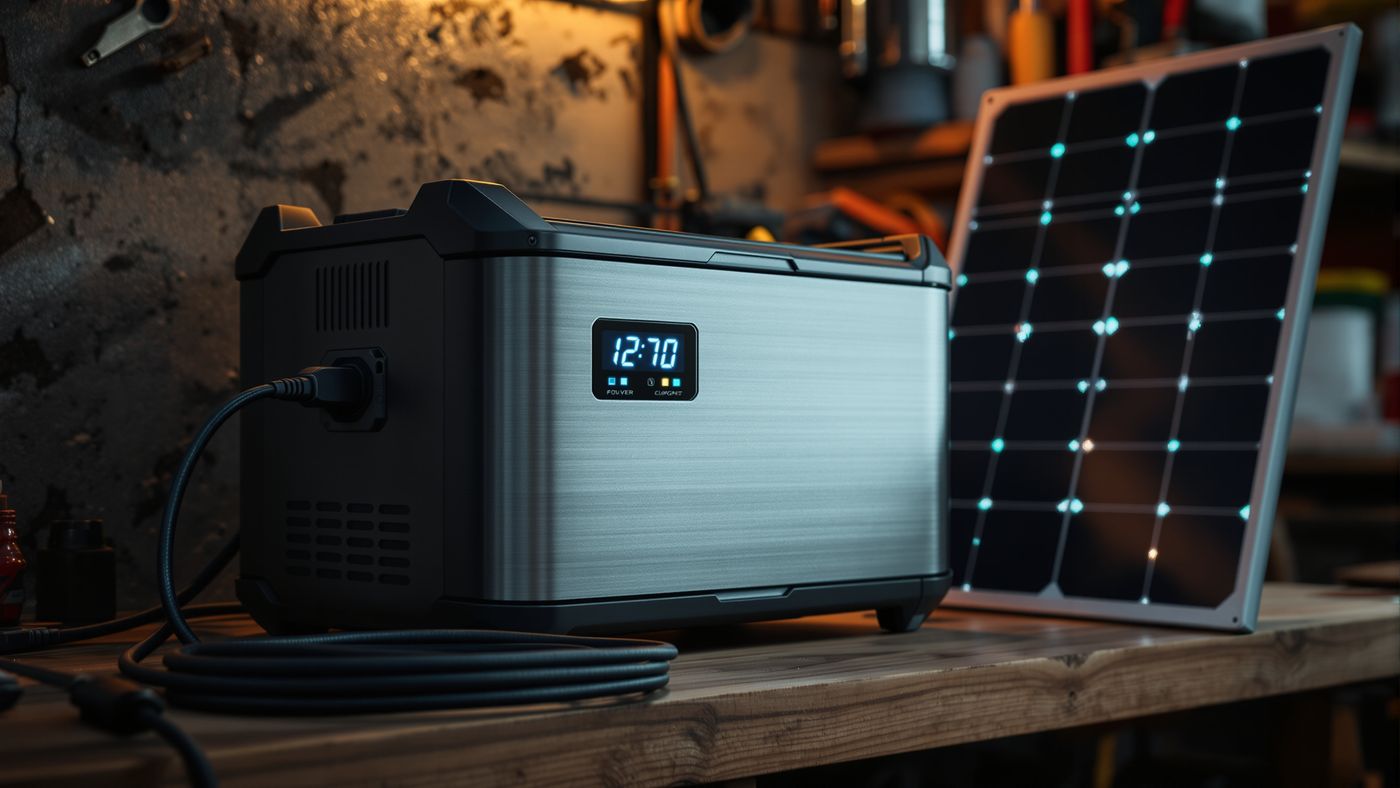
A portable solar generator is really two products working together: a battery-powered inverter that stores and delivers electricity, and a folding portable solar panel that refills it from the sun. Together they let you run a fridge, charge phones and laptops, keep a CPAP machine going, or power lights and a fan during an outage - without fumes, fuel, or a pull-cord engine. For households that want quiet, clean backup power they can also take camping, a solar generator is often the most practical first purchase.
This guide explains how to choose between the leading portable solar panels and solar generators, from compact weekend units to large systems that can carry a home's essentials for days. We focus on the factors that actually matter - battery capacity in watt-hours, panel wattage, charge-controller type, and battery chemistry - so you can match a system to your real needs instead of chasing the biggest number on the box.
We are experienced buyers, not a testing lab, so this guide is built from published manufacturer specifications and the practical questions that come up again and again: how much usable capacity a unit really has, how quickly it refills, what it can run, and how long the battery is likely to last. We favour established product lines with real support networks, widely available replacement parts, and honest capacity ratings, and we say plainly where a precise figure should be checked against the current model before you buy. We do not rank by sponsored placement, and we flag the trade-offs - weight, fan noise, and cost per watt-hour - that spec sheets tend to hide.
Our picks
Jackery Explorer power stations with SolarSaga panels
Typical price band: $300-4,000 depending on size and panels
Jackery's Explorer line is the name most people picture when they think of a portable solar generator, and it earns that reputation with a simple, friendly design that works the same way across the range. Pair an Explorer power station with a matching SolarSaga folding panel and you have a self-contained system that charges from a wall outlet, a car, or the sun. The smaller units suit phones, lights, and laptops; the larger ones can run a full-size fridge for a stretch and accept more than one panel at a time. Exact capacity and panel wattage vary by model, so check the current specs of the size you are considering.
- Who it suits: first-time buyers who want a well-supported, easy-to-use system with a large accessory ecosystem.
- Watch for: the largest units are heavy, and the bundled panels are convenient but not the cheapest way to add solar wattage.
- Product lineJackery Explorer power stations + SolarSaga panels
- Typical capacityCompact (~300Wh class) up to large 2,000Wh+ classes
- Battery chemistryLithium-ion in smaller units; LiFePO4 in newer models
- Solar chargingFolding panels; multiple solar inputs on larger units
- Best forHome backup, camping, and tailgating
- NoteCapacity and panel wattage vary by model - check current specs
Pros
- Broad range from pocket-sized to whole-fridge capacity
- Long-running, widely trusted brand with good support
- Panels and accessories sold to match each unit
Cons
- Heavy at the top of the range
- Bundled solar panels are convenient but pricey per watt
Affiliate link - we may earn a commission at no cost to you.
EcoFlow Delta and River series
Typical price band: $250-5,000 depending on model and expansion
EcoFlow splits its portable power stations into the compact River line, aimed at camping and small devices, and the larger Delta line, built for serious home backup. The Delta family is where EcoFlow stands out: fast charging, high solar input, expandable batteries on some models, and, on selected units, a switchover feature that can keep a device running through a brief outage like a small UPS. Battery chemistry varies across the range, with lithium-iron-phosphate (LiFePO4) used on models rated for many more charge cycles. Confirm which chemistry and cycle rating the specific model uses before you buy.
- Who it suits: buyers who want the fastest recharge and the most features, and who value expandable capacity.
- Watch for: premium pricing, and a wide model range that rewards careful spec comparison.
- Product linesEcoFlow River (compact) and Delta (large)
- Typical capacityRiver: small to mid; Delta: mid to several thousand Wh
- Battery chemistryLiFePO4 on many current models; check the unit
- Solar chargingHigh solar input ceilings on Delta models
- Standout featureFast AC recharge; UPS-style switchover on some units
- Best forHome backup and heavy-duty portable power
Pros
- Very fast wall and solar charging
- Expandable battery options on many models
- Feature-rich app control and monitoring
Cons
- Higher prices than comparable-capacity rivals
- Broad model range, so spec-check the exact unit
Affiliate link - we may earn a commission at no cost to you.
Anker SOLIX power stations and panels
Typical price band: $150-3,500 depending on capacity
Anker built its reputation on chargers and power banks, and its SOLIX line brings that same focus on reliability and value to portable power stations and solar panels. SOLIX units lean toward lithium-iron-phosphate batteries, simple controls, and sensible capacity tiers, often undercutting premium brands on price per watt-hour while still offering solid app support and a strong warranty. The range covers compact camping units up to large home-backup systems that accept matching folding panels.
- Who it suits: value-focused buyers who want dependable charging hardware and straightforward specs.
- Watch for: fewer specialty features than the most premium brands, and top models that are still costly.
- Product lineAnker SOLIX portable power stations and panels
- Typical capacitySmall portable units up to multi-thousand-Wh systems
- Battery chemistryLiFePO4 on many models for longer cycle life
- Solar chargingAccepts matched SOLIX folding solar panels
- Best forValue buyers and first-time home-backup shoppers
- NoteWatt-hour figures differ by model - confirm before buying
Pros
- Strong price-per-watt-hour value
- Reliable brand history in charging hardware
- Good warranty and app support
Cons
- Fewer niche features than premium rivals
- Top-end models are still expensive
Affiliate link - we may earn a commission at no cost to you.
Bluetti portable power stations
Typical price band: $200-4,000 depending on size
Bluetti's line leans heavily into lithium-iron-phosphate batteries, expandable capacity, and models sized for apartment and condo living, where a compact, carryable unit that can run a fridge, a router, and a few lights through an outage matters more than raw output. Many Bluetti units accept an add-on battery for extra runtime and work with folding solar panels, so a small starter system can grow over time. The brand covers a wide span from carry-on power stations to home-sized backup systems.
- Who it suits: apartment dwellers and renters who need compact, expandable backup they can move easily.
- Watch for: cycle life and chemistry vary by model; check the exact watt-hours and battery type.
- Product lineBluetti portable power stations and solar panels
- Typical capacityCompact to multi-thousand-Wh with expansion
- Battery chemistryLiFePO4 common across the range
- Solar chargingMatched folding panels; open to third-party panels
- Best forApartments, renters, and expandable starter systems
- NoteEstablished brand; verify exact model specs
Pros
- LiFePO4 longevity on many models
- Expandable battery options
- Compact sizes suited to apartments
Cons
- Some units run fans audibly under heavy load
- Feature set varies widely across the range
Affiliate link - we may earn a commission at no cost to you.
Goal Zero Yeti power stations
Typical price band: $300-4,000+ depending on model
Goal Zero Yeti is one of the longest-standing names in portable solar power, with a reputation for durable hardware and a large ecosystem of panels and accessories. Yeti power stations pair naturally with Goal Zero's folding Boulder and Nomad panels, and the line spans small carry units to large home-backup systems. It tends to cost more per watt-hour than value-focused brands, but buyers who want a proven, well-supported system often consider the premium worthwhile.
- Who it suits: buyers who value a mature ecosystem and a long track record over the lowest price.
- Watch for: higher cost per watt-hour, and heavier models at the top end.
- Product lineGoal Zero Yeti power stations + Boulder/Nomad panels
- Typical capacitySmall carry units to large home-backup systems
- Battery chemistryVaries by model; newer units favour LiFePO4
- Solar chargingDesigned to pair with Goal Zero folding panels
- Best forEstablished-ecosystem buyers and off-grid use
- NoteConfirm chemistry and capacity for the model you choose
Pros
- Long-established, durable product line
- Deep ecosystem of solar panels and accessories
- Widely available support and parts
Cons
- Premium pricing per watt-hour
- Top models are heavy to move
Affiliate link - we may earn a commission at no cost to you.
BioLite BaseCharge and SolarPanel
Typical price band: $150-1,300 depending on size
BioLite's BaseCharge power stations are aimed at campers, van-lifers, and small-space households that want clean solar power without a premium price. The units are compact, quiet, and simple to live with, with thoughtful touches like clear charge-indicator dials and matching folding solar panels. They will not run a large fridge for days, but for phones, lights, laptops, a fan, and small appliances they are a tidy, well-made entry point to solar power.
- Who it suits: campers and apartment dwellers who want a compact, affordable solar setup.
- Watch for: modest capacity and output - check the specs against your devices.
- Product lineBioLite BaseCharge power stations + SolarPanel
- Typical capacityCompact classes for camping and small devices
- Battery chemistryLithium; confirm the exact model specs
- Solar chargingAccepts BioLite folding solar panels
- Best forCamping, vans, and light apartment backup
- NoteSmaller capacity than big home-backup systems
Pros
- Affordable entry into solar power
- Compact, quiet, and easy to store
- Clever, user-friendly design
Cons
- Not enough output for large appliances
- Smaller range than the biggest brands
Affiliate link - we may earn a commission at no cost to you.
What actually matters
Battery Capacity: Think in Watt-Hours of Usable Power
Capacity is measured in watt-hours (Wh), and it is the single number that decides how long a system lasts. A rough planning figure helps more than raw sales copy: a modern refrigerator can use roughly 1,000Wh or more per day, a laptop is often in the 40-60Wh range per charge, and a phone is a small fraction of that. Capacity is usually quoted for the whole battery, and usable output is a little lower after inverter losses, so allow a margin.
- Under ~500Wh: phones, lights, laptops, a fan, small electronics.
- ~500-1,000Wh class: the same plus a TV, a router, a CPAP, and short runs of a small appliance.
- ~1,500Wh and up: fridge runtime for hours, and whole-evening home backup.
Treat these as ballparks and check the current model specs, since efficiency varies. When in doubt, total up the wattage of what you want to run and multiply by the hours you need it.
Panel Wattage: How Fast the System Refills
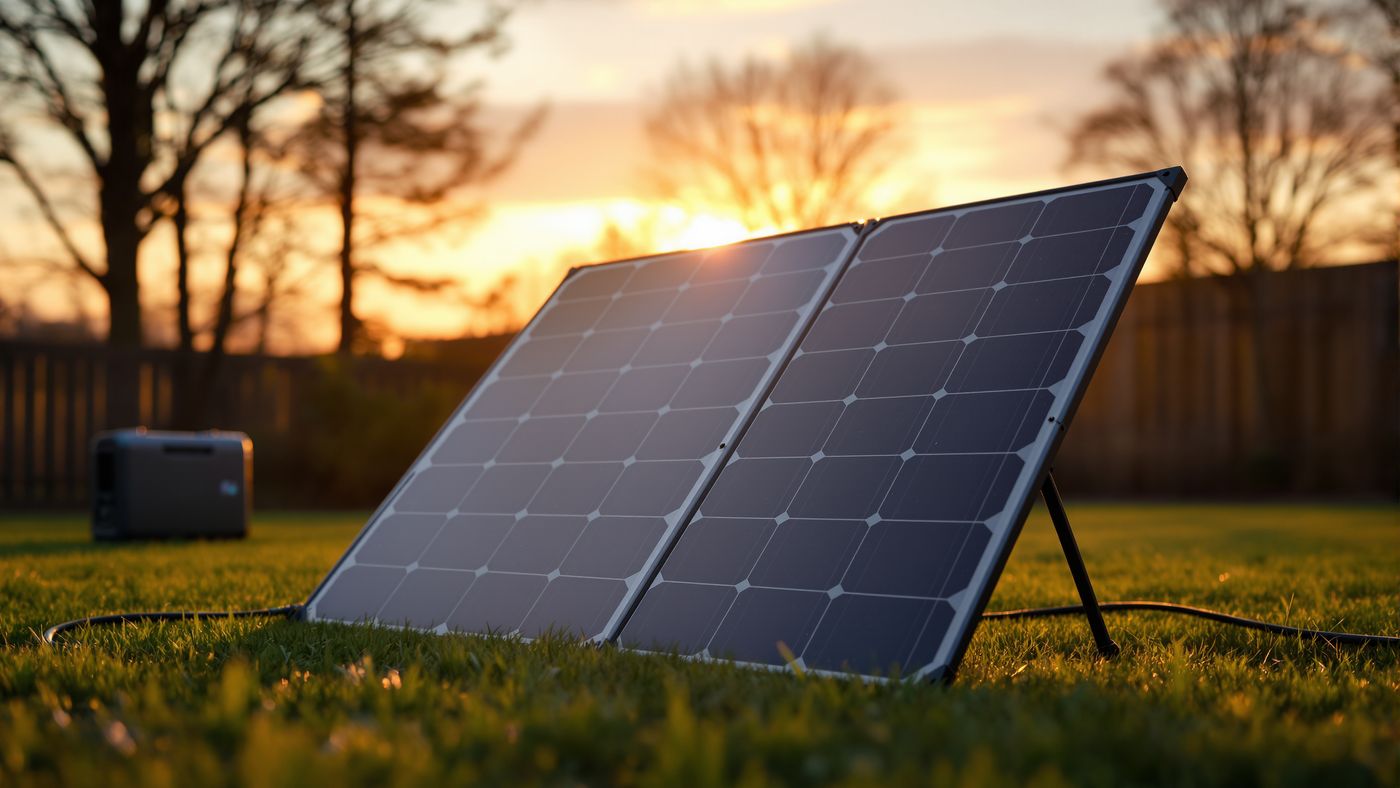
Capacity tells you the size of the tank; panel wattage tells you how fast the sun fills it. A 100W folding panel, in good direct sun, delivers a meaningful fraction of that over a full day once angle, clouds, and efficiency are accounted for. Recharging a large battery from a single small panel can take more than a day, which is fine for a slow trickle and frustrating if you expected a fast turnaround.
Match the panel to the battery: a big power station usually wants several hundred watts of solar to refill in a reasonable time, and many large units accept two or more panels at once. Roof-mounted or briefcase-style panels are heavier but capture more. If your plan is to recharge in one sunny day, size the panel generously and confirm the unit's maximum solar input before you commit.
MPPT vs PWM Charge Controllers
Inside the panel-to-battery path sits a charge controller, and its type affects how much of the sun's energy actually reaches the battery. MPPT (maximum power point tracking) controllers actively tune the incoming voltage to harvest more power, especially in cooler weather or when the panel is not perfectly angled. PWM (pulse-width modulation) controllers are simpler and cheaper but leave some power on the table.
- MPPT: better harvest, better for larger arrays and long panel runs; most premium stations use it.
- PWM: fine for small panels close to the battery and for the tightest budgets.
If two systems are otherwise similar, MPPT is the feature worth paying a little more for, and it matters most when your panel is large relative to the battery.
Battery Chemistry and Cycle Life
Two chemistries dominate: lithium-iron-phosphate (LiFePO4) and the lighter, energy-denser lithium-ion (often NMC). LiFePO4 is heavier for the same capacity but typically tolerates many more charge cycles and holds up better with age, which suits a unit you leave plugged in and expect to keep for years. NMC packs are smaller and lighter, which suits camping and travel.
Look at the cycle rating rather than the advertising: a battery rated for thousands of cycles at a stated depth of discharge will outlast one rated for a few hundred. Because ratings and warranties differ by model, check the current specs for the exact unit you are considering, and store the system somewhere temperate rather than a freezing garage.
What It Can Actually Run, and How Loud It Is
Capacity is not the only limit: every power station has a continuous output rating in watts and a higher surge rating for motor-driven appliances. A fridge or a sump pump can pull a startup surge well above its running draw, so check the continuous and peak figures against anything with a motor. Some units also handle a brief grid switchover, which keeps a router or medical device running through a short outage.
Two practical notes: many stations use a cooling fan that becomes audible under heavy load, which matters for bedroom use, and pass-through charging while the unit is plugged in can be limited on cheaper models. Since these details change between versions, confirm them for the specific model rather than assuming.
Frequently asked questions
How much solar generator capacity do I need for a power outage?
It depends on what you want to keep running. For phones, lights, a laptop, a router, and a fan, a unit in the 500-1,000Wh class is usually plenty. If you want to run a full-size refrigerator for hours or power a whole evening of household essentials, look toward the 1,000-2,000Wh class or larger. Add up the wattage of your must-run items, multiply by the hours you need, and allow a margin - then check the current model specs.
Can a portable solar panel charge a solar generator in one day?
Often yes, if the panel wattage is matched to the battery size and you get good direct sun. A large battery charged from one small panel may instead take a couple of days. For a same-day recharge, choose a generous panel and confirm the unit's maximum solar input and how many panels it accepts. Clouds, shade, and panel angle all cut the real-world yield well below the rated wattage.
What is the difference between MPPT and PWM charge controllers?
MPPT controllers track the panel's best operating point and convert more of the available power into charge, especially in cool or uneven conditions. PWM controllers are simpler and cheaper but waste a bit more of the panel's output. For small panels and tight budgets PWM is fine; for larger arrays, MPPT is the better long-term choice.
Is a solar generator the same as a gas generator?
No. A solar generator is a battery and inverter you recharge from the sun or a wall outlet; it is silent, emits no exhaust, and can be used indoors. A fuel generator produces more sustained power for heavy loads but needs gasoline or propane, makes noise, and must run outdoors because of carbon-monoxide risk. Many households keep a solar generator for indoor essentials and use fuel power only for heavy or long tasks.
Can a solar generator run a refrigerator or a CPAP machine?
Frequently, yes, within limits. A CPAP usually draws little and runs well on a modest unit; a refrigerator draws more and pulls a startup surge, so check both the continuous and peak output ratings. Runtime depends on capacity and on how often the fridge compressor cycles. Before you rely on it, confirm the current model specs and, ideally, test the setup once so the numbers are not a surprise.
How long do solar generator batteries last?
It depends on chemistry and how the unit is treated. LiFePO4 systems are typically rated for thousands of charge cycles and often last many years in normal use, while lighter lithium-ion packs generally have shorter cycle lives. Keeping the unit in a temperate place and not leaving it fully drained helps. Because warranties and cycle ratings vary by model, check the current specs for the exact unit.
What to do first
Start by deciding what you want to keep running during an outage and for how long, then total the wattage and the hours. That single list tells you whether you need a compact 500Wh-class unit or a larger system, and it stops you from overbuying. If indoor essentials and quiet operation matter most, a solar generator is the natural first step; if heavy loads are the priority, plan on a fuel generator outdoors and keep a solar unit for everything inside.
Not sure where this item fits in the bigger picture? The free The Ultimate Preppers Guide 2027 has the full priority order and printable checklists.